Leave Your Message
A Car Aroma Diffuser is a small device designed to release fragrance inside a vehicle. It can make a short commute feel fresher, calmer, and more personal. Unlike a household diffuser, it must work in a compact cabin with changing temperatures, vibration, and limited airflow.
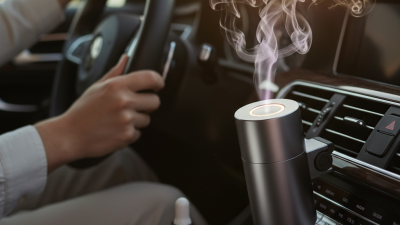
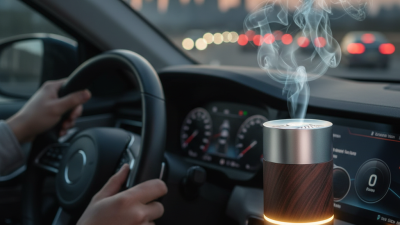
Most models use one of three methods. A vent clip allows air to pass through a scented pad or liquid cartridge. Passive designs need no power. Other models use gentle heat or ultrasonic vibration to disperse fragrance. Some connect to a USB port and offer adjustable mist settings. The basic process is simple: fragrance enters the air, circulates through the cabin, and gradually becomes less noticeable.
Small details matter.
A reliable Car Aroma Diffuser should have a secure container, clear instructions, and leak-resistant construction. Essential oils can damage dashboards, plastic surfaces, or synthetic leather when spilled. Strong scents may also distract drivers or irritate passengers, especially children, pets, or people with sensitivities. Moderation is not just polite; it supports safer driving.
Real-world performance is rarely perfect. A diffuser may smell powerful near the vent but weak in the back seat. Heat can change the fragrance, and an open window can remove it quickly. That is easy to overlook. This guide examines how different designs work, what their components do, and how to choose one responsibly. It also considers cleaning, refill habits, scent strength, and practical safety. The goal is not simply a pleasant smell, but informed use based on realistic driving conditions.
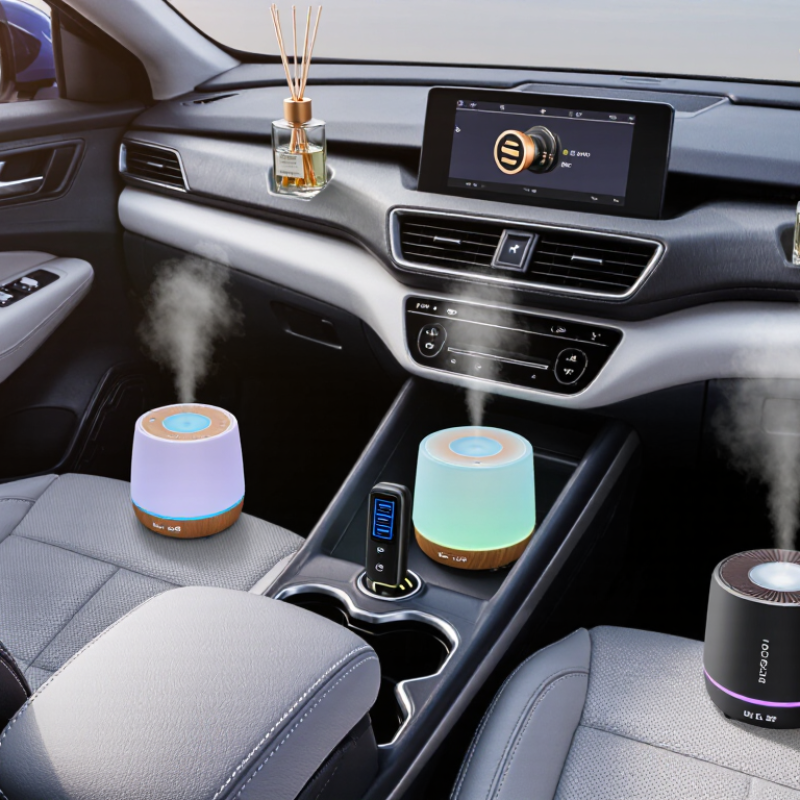
A car aroma diffuser is a compact device that releases a chosen fragrance inside a vehicle. It may use absorbent wood, felt, a refill pad, or a small electric reservoir. Passive models rely on airflow and warmth. Electronic models use gentle heat, vibration, or a fan to disperse fragrance more evenly.
It is surprisingly simple. When air passes over the scented material, volatile fragrance molecules enter the cabin. The result depends on airflow, temperature, cabin size, and fragrance concentration. A vent-mounted diffuser can spread scent quickly, while a hanging model usually works more slowly. In my experience, strong airflow can make the first few minutes feel overwhelming. I once assumed more fragrance meant better freshness. It did not.
A reliable diffuser should release scent gradually and remain stable during braking or sharp turns. Keep liquid away from dashboards, screens, upholstery, and skin, because some formulas may stain or irritate. Avoid blocking the driver’s view or important controls. People with allergies, asthma, or scent sensitivity may need very light use or no fragrance at all. Ventilation still matters, especially after smoking, transporting food, or driving in hot weather. Check the product instructions carefully, since refill materials and operating limits differ. A subtle scent is usually easier to tolerate than a heavy one.
| Aspect | What It Means | How It Works in a Vehicle | Practical Considerations |
|---|---|---|---|
| Basic Definition | A car aroma diffuser is a compact device or scent holder designed to release fragrance inside a vehicle. | It distributes aromatic compounds into the cabin air, either passively or with an active mechanism. | It improves cabin scent but does not remove the underlying source of odors. |
| Main Diffuser Types | Common types include passive, evaporation-based, ultrasonic, and heated diffusers. | Passive models rely on natural evaporation, while active models use airflow, vibration, or gentle heat to increase dispersion. | The operating method affects scent intensity, noise, power use, and maintenance. |
| Fragrance Material | Fragrance may come from essential oils, fragrance oils, scented pads, absorbent wood, or fragrance cartridges. | The material releases volatile aromatic molecules that mix with the air in the cabin. | Only use liquids and refill materials that are suitable for the specific diffuser design. |
| Passive Operation | Passive diffusers do not require electricity or a battery. | Air movement and normal evaporation gradually carry fragrance from an absorbent material into the cabin. | They are usually simple and quiet, but scent strength can vary with temperature and airflow. |
| Active Operation | Active diffusers use a power source to help distribute fragrance. | A small fan, vibrating atomizer, or heating element disperses fragrance more consistently than passive evaporation. | Active models require electricity, battery charging, or periodic battery replacement. |
| Power Sources | Possible power sources include a vehicle accessory socket, USB connection, rechargeable battery, or no power at all. | The power source supplies energy to a fan, atomizer, indicator light, or heating component when included. | A powered device should not obstruct vehicle controls, visibility, or airbag deployment areas. |
| Ultrasonic Diffusion | Some diffusers use high-frequency vibrations to create a fine mist from a water-based liquid mixture. | A piezoelectric element vibrates rapidly and breaks the liquid into small droplets that enter the air. | These devices require careful filling and should be kept upright to reduce the risk of spills. |
| Heat-Based Diffusion | A heated diffuser uses a low-temperature heating element to accelerate fragrance evaporation. | Heat increases the release of volatile aromatic compounds from a pad or liquid reservoir. | Excessive heat can alter some fragrances, so the device should be used according to its instructions. |
| Scent Intensity | Scent intensity describes how noticeable the fragrance is inside the cabin. | Intensity is influenced by fragrance concentration, airflow, cabin size, temperature, and diffuser output. | A lower setting is generally preferable when occupants are sensitive to strong scents. |
| Coverage in the Cabin | Coverage refers to how evenly the fragrance reaches the passenger compartment. | Placement near moving air can improve distribution, but direct airflow may consume fragrance more quickly. | A central, stable location often provides more even distribution than a concealed corner. |
| Typical Operating Pattern | Diffusers may operate continuously or in timed, intermittent cycles. | Intermittent operation releases fragrance in short periods and pauses between cycles. | Timed operation can help reduce fragrance use and prevent the scent from becoming overpowering. |
| Refilling and Replacement | Depending on the design, users may replace a cartridge, add liquid, or change a scented pad. | Fragrance output decreases as the liquid, pad, or absorbent material becomes depleted. | Refills should be handled carefully to avoid contact with dashboards, upholstery, and electronic controls. |
| Maintenance | Maintenance may include wiping the housing, cleaning residue, and checking the reservoir or diffuser outlet. | Cleaning helps prevent blocked openings, buildup, leaks, and inconsistent fragrance output. | Disconnect powered devices before cleaning and keep liquids away from electrical connections. |
| Effect on Air Quality | A diffuser adds fragrance to the air; it is not the same as an air purifier or ventilation system. | It masks or supplements cabin scent rather than filtering dust, smoke particles, or gases. | Regular ventilation and cleaning are more appropriate for addressing persistent odor sources. |
| Safety and Placement | The diffuser should remain secure and should not interfere with driving or vehicle safety equipment. | A stable placement prevents movement, spills, blocked vents, and obstruction of the driver's view. | Avoid placing it on or near airbags, steering controls, pedals, or locations that can become very hot. |
| Suitable Users | Car aroma diffusers may suit drivers who want a controlled fragrance experience during travel. | The user can select a fragrance type and, on active models, adjust the output or operating schedule. | People with fragrance sensitivity, allergies, or respiratory conditions may prefer little or no added scent. |