Top Tips for Choosing the Perfect Scent Candle?
When it comes to choosing the perfect Scent Candle, expert Jane Holloway emphasizes the importance of personal connection. She states, "A scent candle should reflect your personality and elevate your space." This insight highlights that fragrance is more than just aroma; it creates an atmosphere.
The world of Scent Candles is vast. From floral to woody fragrances, choices can feel overwhelming. Each candle tells a unique story. Consider the mood you wish to create. Do you want a calming presence or an energizing spark? Reflecting on your preferences is essential.
Pay attention to the materials used in Scent Candles. Quality wax and natural scents often lead to a better experience. Yet, remember that not every candle suits every individual. Some may find certain fragrances too strong or cloying. Experimentation is key. Take your time to discover what resonates with you and your space.
Factors to Consider When Choosing Scented Candles: A Comprehensive Guide
Choosing the right scented candle can enhance your home atmosphere significantly. When selecting a candle, consider the wax type. Many experts recommend natural waxes like soy or beeswax. These options burn cleaner and longer. A study by the National Candle Association reveals that nearly 35% of consumers prefer candles made from natural ingredients.
Fragrance is another critical factor. Different scents evoke various emotions and memories. Floral, woody, and citrus notes can transform your space. Research indicates that certain scents, such as lavender, reduce stress by up to 30%. However, not every scent appeals to everyone. Testing candles in-store can help you avoid purchasing a fragrance that doesn't resonate.
Packaging and design are also vital considerations. An aesthetically pleasing candle can serve as decor. Seventy percent of consumers consider packaging when buying candles. This statistic emphasizes how appearance matters. While these factors may seem trivial, they contribute to the overall experience. Reflect on your preferences and the atmosphere you wish to create. Making an informed choice is essential for maximizing your enjoyment.
Understanding Candle Wax Types: Paraffin vs. Soy vs. Beeswax
When selecting a scented candle, understanding wax types is crucial. Paraffin, soy, and beeswax are the most common. Paraffin is the traditional choice. It burns well but releases toxins. Many people overlook this fact. The soot produced can stain walls. This might not be an issue for some, but it’s worth considering.
Soy wax is a popular alternative. It’s plant-based and burns cleaner than paraffin. Soy supports sustainable practices. However, not all soy is grown responsibly. Check the source if eco-friendliness is a priority for you. Additionally, soy candles may not hold their scent as well. This can lead to disappointment if scent throw is what you desire.
Beeswax, on the other hand, is a natural choice. It burns longer and purifies the air. The subtle honey scent is a bonus. Yet, beeswax candles tend to be pricier. This could be a drawback for some buyers. Weighing these factors helps guide your decision. Each wax has its merits and drawbacks. Choose what aligns with your values and preferences.
Top Tips for Choosing the Perfect Scent Candle
| Wax Type |
Burn Time (hours) |
Scent Throw |
Eco-Friendly |
Cost |
| Paraffin |
30-50 |
Strong |
No |
$ |
| Soy |
35-50 |
Moderate |
Yes |
$$ |
| Beeswax |
40-80 |
Mild |
Yes |
$$$ |
The Role of Fragrance Notes in Scent Selection: Top, Middle, and Base
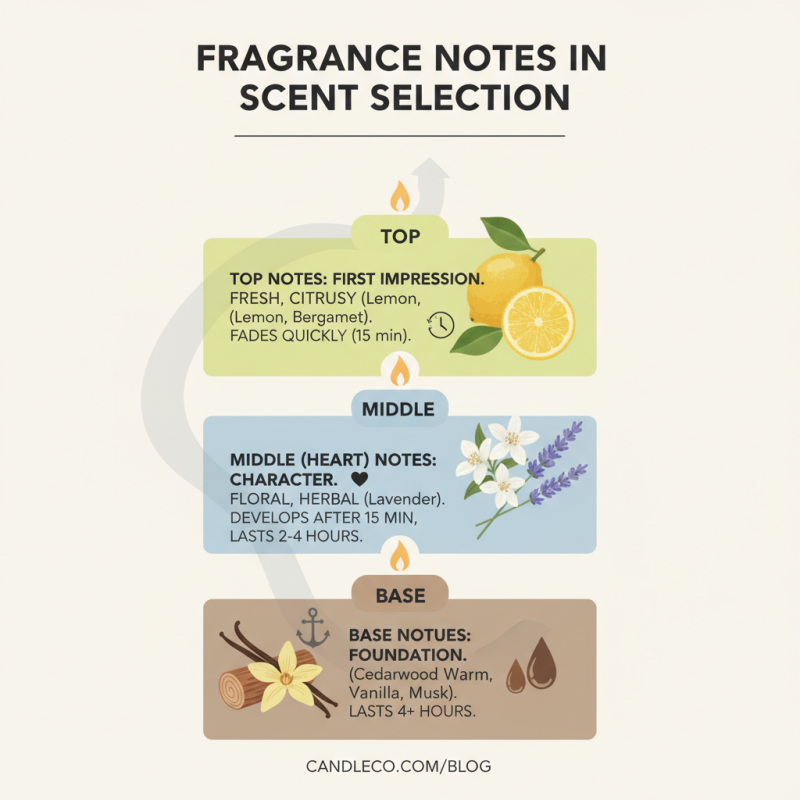
When selecting a scented candle, understanding fragrance notes is crucial. Each candle comprises three layers of scent: top, middle, and base notes. Top notes are the first impressions. They are fresh and often citrusy. Lemon and bergamot are popular choices. These scents are vibrant but fade quickly, usually within 15 minutes.
Middle notes form the heart of the fragrance. They last longer than top notes and often include floral or herbal scents. Lavender and jasmine are common in this category. These notes add depth and roundness. They can transform the overall experience once the top notes dissipate. However, if you overlook these notes, your candle may feel unbalanced.
Base notes provide richness and longevity. They are the foundation upon which the entire scent rests. Vanilla, sandalwood, and amber are examples that linger. They can evoke warmth and comfort. Yet, finding the right balance is tricky. Too much vanilla can be overpowering, while too little can make the scent feel weak. Each layer interacts uniquely, creating a complex aromatic journey. This understanding can significantly enhance your candle selection process.
Burn Time and Candle Size: Maximizing Your Candles' Lifespan
Choosing the right candle size and understanding burn time can significantly enhance your experience. A common insight from industry reports is that the average burn time for a standard votive candle is about 10 to 15 hours. In contrast, larger jar candles can burn for up to 80 hours. This difference can affect both the ambiance of your space and your spending.
Many consumers overlook how candle size impacts burn efficiency. A small candle, while affordable, will require more frequent replacement. A larger candle, though initially pricier, offers a longer-lasting scent experience. Reports suggest that investing in bigger candles can reduce waste, as they require less frequent purchases. However, larger candles can also be misleading, as improper wick trimming can lead to uneven burning and shorter lifespan.
Consider also the environment when buying candles. Soy or beeswax candles may last longer and have cleaner burns compared to paraffin. A study showed that soy candles can burn up to 50% longer than traditional paraffin ones under the same conditions. But even natural candles can underperform if not cared for properly. Regularly assess the burn pool and ensure wicks are trimmed, as improper care can negate the benefits of your chosen candle size.
Burn Time vs. Candle Size: Maximizing Your Candles' Lifespan
Safety Standards and Allergens in Scented Candles: What to Look For
When choosing a scented candle, safety is a critical factor. Many candles contain allergens that can trigger reactions. Not all candles are made equal. Some may use synthetic fragrances, which can irritate sensitive individuals. Always read the labels carefully.
Look for candles made with natural materials. Soy or beeswax candles generally produce fewer toxins. Check for certifications that indicate compliance with safety standards. This adds a layer of trust. Avoid candles with added dyes, as they can release harmful substances when burned.
Testing scents is essential, but do not ignore safety. Fragrances can evoke strong feelings. However, they can also cause headaches or respiratory issues. Listen to your body when trying new scents. Choose alternatives if you experience discomfort. Picking a candle should be enjoyable, not hazardous.