How to Buy Empty Perfume Bottles Wholesale?
Buying Empty Perfume Bottles wholesale is not simply a price comparison exercise. It is a packaging decision that affects product safety, presentation, shipping costs, and customer trust. A bottle may look elegant online, yet feel thin, unstable, or poorly finished when it arrives.
Marc Rosen, a respected luxury packaging designer, once said, “Packaging is the silent salesman.” His observation fits perfume especially well. Before customers smell the fragrance, they see the glass, cap, collar, label area, and spray mechanism. A heavy bottle can suggest luxury. A loose atomizer can damage that impression quickly.
Wholesale buyers need practical experience, not attractive catalog images alone. They should examine glass clarity, wall thickness, neck compatibility, spray output, closure strength, and carton protection. Request samples first. Test them on a filling line, if possible. Small defects become expensive at scale.
Supplier reliability matters too. Ask about minimum order quantities, production lead times, customization limits, replacement policies, and quality inspections. A low unit price may hide high shipping losses or inconsistent batches. That is easy to overlook.
There is no perfect bottle.
Some compromises are unavoidable. A custom mold may strengthen brand identity but increase tooling costs and delay production. A standard shape may launch faster, though it can look less distinctive. This guide explains how to compare Empty Perfume Bottles wholesale, evaluate suppliers, estimate real costs, and choose packaging that supports both the fragrance and the business behind it.
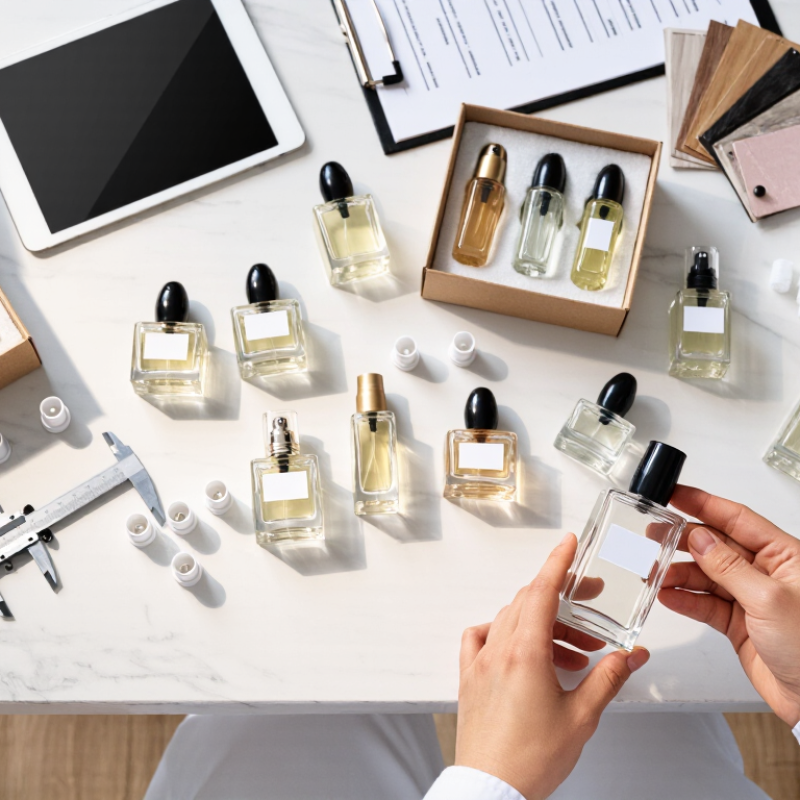
Define Your Empty Perfume Bottle Wholesale Requirements
Before requesting wholesale quotes, define what the bottle must do. A 50 ml bottle suits a travel-friendly fragrance, while a 100 ml bottle creates a more substantial shelf presence. Record the target capacity, bottle height, neck size, glass color, and preferred shape. Add the closure type, spray performance, dip tube length, and cap material. Small details matter. A mismatched neck can delay filling and increase costs.
Your requirements should also cover appearance and production limits. Specify clear, frosted, amber, or colored glass, along with printing, labeling, coating, and decoration needs. Ask for samples before approving a large order. Check the bottle under bright light for bubbles, scratches, uneven coating, and weak threads. Test the sprayer several times. It should produce a consistent mist without leakage. I once underestimated carton strength, and several samples arrived with chipped edges. That mistake changed how I review packaging.
Set practical purchasing conditions before negotiation. State the estimated quantity, acceptable defect rate, sample approval process, delivery window, and packing method. Request material details, inspection records, and written specifications. Confirm whether the supplier can repeat the same color and finish in future batches. This is often overlooked. Think about storage space and shipping weight, too. The cheapest unit price may not be the lowest total cost. Your first specification may be imperfect, so leave room for testing and revision.
Compare Bottle Materials, Shapes, Sizes, and Closure Options
How to Buy Empty Perfume Bottles Wholesale?
Bottle material affects appearance, weight, and shipping cost. Glass gives perfume a stable, premium feel and resists many fragrance ingredients. However, thick glass increases freight expenses and breakage risk. Plastic is lighter and more flexible, but it may scratch or affect the product’s visual value. Ask suppliers for material specifications, wall thickness, and compatibility test results. Do not rely only on catalog photos.
Shape should match your filling process and retail position. A square bottle offers strong shelf presence but may need careful carton protection. Rounded designs are easier to hold and often reduce sharp impact points. Test the bottle in your actual packaging. Small defects become obvious under bright store lighting. It happens.
Size decisions should reflect usage and customer habits. Common capacities range from travel-friendly formats to larger home-use bottles. Smaller bottles lower the initial filling cost, while larger bottles may require stronger pumps and heavier cartons. Check the actual liquid capacity, not only the exterior dimensions. A wide shoulder can make a bottle look larger than it fills.
Closure options include spray pumps, screw caps, crimp systems, and decorative covers. The closure must fit the neck finish precisely. Poor matching can cause leakage, loose caps, or uneven spraying. Request samples with the intended fragrance and test them for several days. Check spray strength, collar alignment, and cap security. Wholesale pricing is useful, but inconsistent closures can create more expense than expected. One overlooked detail can weaken the entire package.
Find Reliable Wholesale Suppliers and Verify Their Credentials
Buying empty perfume bottles wholesale starts with supplier verification, not price comparison. I once trusted a polished catalog and ignored an unclear factory address. The samples arrived with uneven glass walls and loose caps. That mistake taught me to check credentials before discussing large orders.
Ask for business registration details, a verifiable office address, and a clear production location. Reliable suppliers should explain their quality-control process. Request recent sample photos, packaging specifications, and batch inspection records. For glass bottles, check neck size, weight, surface finish, spray performance, and closure fit. Independent test reports can support their claims, but verify the issuing laboratory. Contact two or three trade references when possible. A supplier who avoids basic questions may create costly delays later.
Tips:
Order samples before negotiating volume. Compare the same bottle under identical conditions. Confirm minimum order quantities, production time, defect policies, payment terms, and shipping responsibilities in writing. Visit the facility through a verified video call if travel is impractical. Ask to see current production, not only prepared showroom images. Be careful with unusually low quotations. They may exclude inner packaging, inspection fees, or replacement costs. I still find supplier screening imperfect, because documents can become outdated. Recheck important details before each major purchase.
Evaluate Pricing, Minimum Orders, Samples, and Customization Services
Buying empty perfume bottles wholesale requires more than comparing the unit price. Grand View Research valued the global fragrance market at approximately USD 50.85 billion in 2022. It also projected a 5.9% annual growth rate from 2023 to 2030. This growth attracts more packaging suppliers, but quality differences remain significant. Request quotations at several volumes, such as 500, 2,000, and 10,000 units. Check glass weight, sprayer performance, closure fitting, carton protection, and delivered cost. A cheap bottle can become expensive after tooling, decoration, freight, and breakage.
Minimum order quantities need careful negotiation. Some suppliers separate the MOQ for standard bottles from the MOQ for custom molds, colors, or printing. Ask whether samples are free, refundable, or charged with shipping. Test the bottle for leakage, spray consistency, cap alignment, and label adhesion. Small details matter. I once underestimated carton strength during sampling; the product looked excellent, but several bottles arrived chipped. That mistake changed my purchasing checklist.
Customization should match the expected sales volume. Color coating, embossed logos, silk screening, and unique caps may require tooling fees and longer lead times. According to Smithers’ sustainable packaging research, lightweighting and recycled content remain important development areas. Ask for material information and recycled-content claims in writing. However, customization is not always better. A complicated design can reduce production stability and increase waste. Get a signed specification sheet before approving bulk production. Suppliers should also clarify tolerances, inspection standards, replacement policies, and payment stages.
Place, Inspect, and Manage Your Wholesale Bottle Order
Buying empty perfume bottles wholesale requires more than comparing unit prices. The supplier’s location affects freight, customs handling, lead time, and communication.
A 2024 Fortune Business Insights report valued the global perfume market at about USD 50.45 billion in 2023. That scale increases packaging demand, but it also encourages rushed purchasing. Request a written quotation showing bottle capacity, neck finish, closure compatibility, minimum order quantity, payment terms, and delivery conditions.
Inspect samples before placing the full order.
Check the glass for bubbles, scratches, uneven thickness, and color variation under bright light. Test the spray pump with your intended formula, because a beautiful bottle can still leak or deliver an inconsistent mist. Measure the neck, dip tube, and cap fit. Ask for a batch inspection record and use a recognized drop-test method, such as ASTM D5276, when appropriate. Keep photos and measurements in the purchase file. Small details matter.
Manage the order through a clear purchase specification. Confirm carton dimensions, inner protection, pallet limits, labeling, and replacement procedures for damaged units.
A 2023 Grand View Research report estimated the global cosmetic packaging market at over USD 30 billion, showing how competitive this supply chain has become. Still, forecasts are not guarantees.
Add a practical buffer for defects and transport delays, but avoid excessive inventory. I once underestimated storage space in planning exercises; that mistake is easy to repeat.
Approve a pre-shipment sample, record the final quantity, and inspect random cartons on arrival. Supplier promises help, but documented controls are safer.