Sourcing Rattan Reed Sticks for international markets requires more than comparing supplier prices. Buyers must understand species, grading, moisture content, diameter, length, surface finish, and intended use. A shipment of straight, pale reeds may look excellent in photographs, yet arrive with brittle ends or uneven thickness. Small details matter.
Rattan botanist Dr. John Dransfield has emphasized that “rattan is a diverse group of climbing palms.” This observation should guide every purchasing decision. Different species can behave differently during drying, cutting, bending, and storage. Ask suppliers for botanical information, harvest location, treatment records, and recent production photographs. Request physical samples. Measure them yourself.
Keep specifications precise.
A reliable sourcing process also examines packaging, fumigation requirements, documentation, and delivery performance. Responsible buyers should confirm that materials come from legal and traceable supply chains. They should also review local import rules before placing large orders. Sustainability claims need evidence, not attractive wording.
There is no perfect supplier search. I have learned that low prices can hide higher rejection rates, delayed production, or costly rework. That possibility deserves attention. A practical comparison should include usable yield, not only the price per bundle. Check ten or twenty pieces from every sample lot. Record cracks, stains, hollow sections, and inconsistent diameters.
This guide explains how global buyers can evaluate Rattan Reed Sticks suppliers, reduce quality risks, and build more dependable purchasing relationships. The process may feel slower at the beginning. It usually saves time later.
Rattan reed sticks come in several practical forms. Round reeds suit chair frames, baskets, lampshades, and decorative weaving. Split reeds provide flexible strands for tighter patterns. Flat and half-round reeds create clean edges on furniture panels and storage boxes. Buyers should confirm the exact form before requesting prices. “Natural” does not always mean untreated.
Grades usually depend on diameter, length, straightness, color, node spacing, and surface quality. Premium grades have consistent sizing, fewer scars, and smoother peeling. Commercial grades may show minor bends, color variation, or visible nodes. These differences can still be acceptable for rustic furniture and handwoven crafts. Grade names are not universal. A supplier’s Grade A may differ from another supplier’s standard.
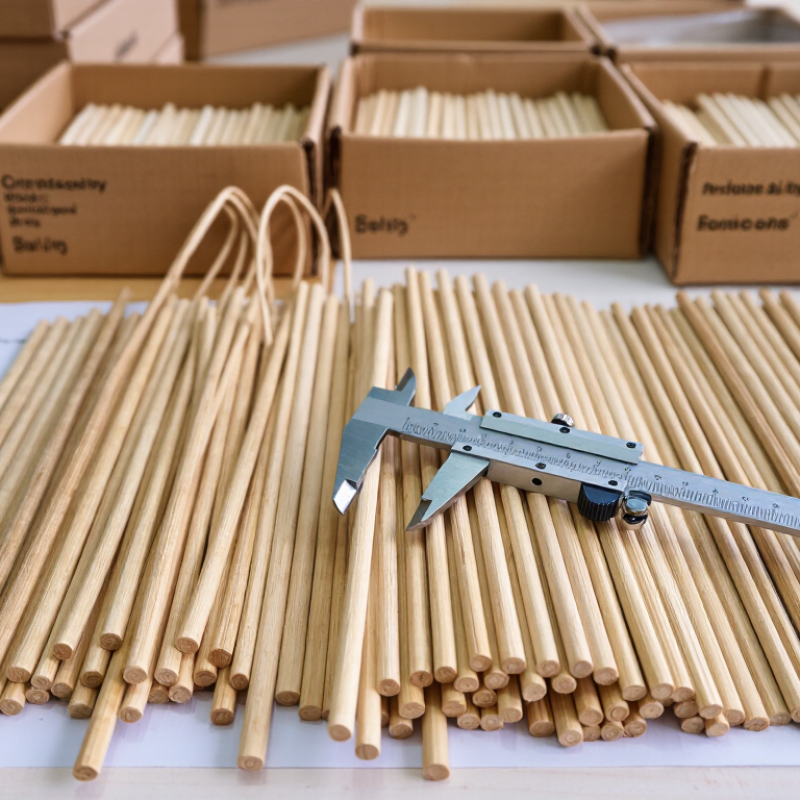
Experienced buyers request samples from several production batches. A caliper checks diameter variation, while a moisture meter helps identify unstable material. Bend testing reveals brittle sections. Inspect the cut ends for cracks, insect damage, and dark internal staining. I have seen attractive samples fail after shipment because the container became humid. That lesson is easy to ignore. It should not be.
Common global uses include seating, baskets, wall panels, gift packaging, craft kits, and lightweight interior accents. For outdoor projects, buyers need stronger treatment and clear performance information. Indoor-grade reeds may fade, split, or develop mold under prolonged moisture. Specify bundle length, piece count, allowable defects, packing method, and inspection standards in writing. Photos help, but physical samples remain more reliable.
Indonesia remains a major source of natural rattan, especially for exporters supplying furniture and basket-making industries. Vietnam has strong processing capacity, with suppliers offering cleaned, dried, and sorted reed sticks. The Philippines and Bangladesh also serve selected markets, although regional availability can change with harvest conditions and local regulations. Buyers should confirm the actual production location, not only the trading office address.
Reliable suppliers provide clear information about rattan species, diameter, length, moisture level, and treatment methods. Ask for recent samples before discussing large quantities. Check whether the sticks show mold, insect damage, uneven color, or cracking around the ends. A professional supplier should explain harvesting permits, factory capacity, packaging, and export documentation. Video inspections can help, but they do not replace physical samples. I have found that small details, such as loose bundles or damp cartons, often reveal larger quality problems. My own judgment is not always perfect, so written specifications and independent inspections remain useful.
Tips: Compare at least three suppliers from the same region. Request moisture readings and a sample packed like the final shipment. Confirm whether pricing includes treatment, inland transport, and export preparation. Keep approved samples for future checks. Do not rely on attractive photographs alone. Ask difficult questions early.
How to Source Rattan Reed Sticks for Global Buyers
Reliable sourcing starts with the material itself. Ask whether the reeds come from mature, properly cured rattan. Mature cane usually offers firmer fibers and fewer soft sections. Check the cut ends for dark stains, insect damage, or hidden splits. A clean, natural scent is preferable. Strong chemical odors deserve further investigation. Species information also matters, although suppliers may describe it inconsistently.
Measure more than length and diameter. Record straightness, taper, wall thickness, and bundle uniformity. A few uneven pieces can affect weaving speed and product appearance. Moisture must be checked with a calibrated meter, not guessed by touch. Agree on an acceptable range for the destination climate and intended use. Excess moisture may encourage mold during shipping. Over-dried reeds can become brittle. Finish quality includes smooth sanding, consistent color, and the absence of sharp fibers. I once accepted a visually attractive sample that revealed rough inner edges during cutting. That mistake was avoidable.
Tips: Request samples from several production batches. Photograph measurements beside a ruler. Test bending, trimming, and surface contact. Keep written inspection records. No method is perfect. Recheck moisture after packaging, because sealed bundles can change during transit. A pre-shipment inspection can also expose variation before the goods leave the factory.
Practical quality checkpoints for evaluating material, size, moisture, and finish before shipment.
The chart presents common buyer-side acceptance benchmarks rather than a universal international standard: moisture should generally remain at or below 12% for stable indoor storage, diameter variation should be limited, and reeds should be straight with a clean, low-defect surface. Actual requirements depend on species, application, destination climate, and contract specifications.
Global buyers should verify more than a supplier’s product photos. Ask for company registration, factory address, tax records, and export references. A video call should show raw rattan, drying areas, splitting tools, and packed cartons. Photos can be old. I learned that the hard way.
UN Comtrade records rattan within HS 1401, a broad category covering several plaiting materials. Therefore, compare suppliers using identical specifications, not general customs values. Request 20–30 sample sticks from different batches. Measure length, diameter, moisture, straightness, color, and surface cracking. Ask for a moisture report and treatment details. The FAO Non-Wood Forest Products database also shows that rattan statistics remain fragmented across producing countries. That makes traceable documentation especially important.
Pricing should separate material, processing, packing, inland delivery, and export charges. Request prices under the same Incoterm and currency. A low quote may hide weak grading or excessive breakage. Test a small paid order before signing a large contract. Check whether the supplier can issue a commercial invoice, packing list, certificate of origin, and consistent carton markings. The World Bank Logistics Performance Index 2023 highlights major differences in customs efficiency and shipment reliability between markets. Confirm port access, lead times, loading photos, and contingency plans. My own screening once focused too heavily on price. That was a mistake. Reliability needs evidence.
| Category | Verification Dimension | Practical Data or Benchmark | Evidence to Request | Buyer Decision Rule | Priority |
|---|---|---|---|---|---|
| Supplier Credentials | Legal business identity | The supplier should provide a valid business registration, operating address, contact person, and company bank details that are consistent across documents. | Registration certificate, business address, official quotation, bank-account confirmation, and recent commercial references. | Reject suppliers whose legal name, payment beneficiary, and quotation details do not match without a documented explanation. | Required |
| Supplier Credentials | Production capability | Confirm whether the supplier is a processor, trading intermediary, or vertically integrated producer. Record monthly capacity by diameter, length, and finish. | Production-flow photographs or video, equipment list, capacity statement, workforce information, and recent production records with confidential data removed. | Use the supplier’s verified capacity rather than a general claim such as “large factory.” | Required |
| Product Specification | Species and material identity | Rattan is a climbing palm material. Species, age, growing region, and processing method can affect color, flexibility, diameter, and durability. | Species or material declaration, harvesting region, processing description, and a retained reference sample. | Match the approved sample and written specification; do not approve only from product photographs. | Required |
| Product Specification | Dimensions and tolerance | Specify finished length, diameter range, straightness, taper, cut-end condition, and allowable visual defects. Example: length tolerance of ±2% can be used when the application permits it. | Dimension sheet, calibrated measuring method, pre-shipment inspection report, and random sample measurements. | Write tolerances into the purchase order instead of relying on phrases such as “standard size.” | Required |
| Product Specification | Moisture content | Dried rattan should be tested using a consistent method. A buyer may set a project-specific target; a common starting specification for dried reed sticks is approximately 12%–18% moisture, subject to climate and end use. | Moisture-testing method, meter type, sampling locations, test results, and packaging conditions at the time of measurement. | Set a maximum moisture level based on destination climate, storage duration, and mold-risk tolerance. | Required |
| Product Quality | Appearance and workmanship | Define acceptable limits for mold, insect damage, splits, stains, bark remnants, rough ends, excessive curvature, and color variation. | Defect-limit chart, approved golden sample, inspection checklist, and photos of acceptable and unacceptable pieces. | Use AQL or a clearly defined defect-percentage rule for commercial inspection. | Required |
| Sample Approval | Sample representativeness | Request samples from at least two production lots when possible. Samples should represent the actual cutting, drying, sorting, and packing process. | Sample identification code, lot number, production date, dimensions, moisture readings, and courier packing details. | Approve a written sample standard and retain one sealed reference sample for comparison. | Recommended |
| Pricing | Quote structure | Compare price by unit, bundle, cubic meter, or weight only after confirming the same dimensions, moisture level, finish, quantity, packaging, and defect allowance. | Formal quotation showing product price, packaging, inland transport, export documentation, inspection fees, and validity period. | Normalize all offers to the same specification and Incoterm before comparing the lowest price. | Required |
| Pricing | Payment terms and cost exposure | Record currency, deposit percentage, balance timing, bank charges, sample charges, tooling or customization fees, and the quotation validity period. | Pro forma invoice, payment schedule, cancellation terms, refund policy for failed samples, and currency details. | Avoid full prepayment until supplier credentials, sample quality, and contract terms have been verified. | Required |
| Export Capability | Incoterms and logistics | Obtain comparable quotations under a named Incoterm and specific destination. Common options include EXW, FOB, CFR, CIF, and DAP, but responsibilities differ by term. | Incoterm quotation, port or place of delivery, estimated transit time, loading plan, freight assumptions, and insurance responsibility. | Do not compare an EXW offer directly with a delivered-price offer without adding all buyer-side costs. | Required |
| Export Capability | Export documents | The supplier should be able to prepare accurate commercial documents and coordinate documents required by the destination country. | Commercial invoice, packing list, transport document, certificate of origin when applicable, treatment or fumigation record when required, and customs classification proposal. | Confirm document requirements with the destination customs authority or licensed customs broker before shipment. | Required |
| Regulatory Compliance | Plant-health requirements | Rattan is a plant-based material. Import controls may require treatment, inspection, phytosanitary documentation, or restrictions on bark and untreated material. | Destination-country import requirements, phytosanitary certificate where applicable, treatment record, and packing-material compliance statement. | Clear regulatory requirements before production; document requirements vary by country and product condition. | Required |
| Packaging | Protection during shipment | Packaging should prevent bending, abrasion, moisture reabsorption, contamination, and mixed-lot identification problems during storage and transport. | Bundle dimensions, bundle count, wrapping material, pallet specification, ventilation method, moisture barrier details, and package marks. | Approve packaging through a simulated handling review or a trial shipment before scaling up. | Recommended |
| Quality Control | Pre-shipment inspection | Inspection should cover quantity, dimensions, moisture, appearance, packaging, marks, and document accuracy before release of the balance payment. | Inspection plan, sampling level, test equipment calibration record, inspection report, and corrective-action procedure. | Define acceptance criteria and the remedy for nonconforming goods in the purchase contract. | Required |
| Supply Continuity | Seasonality and replenishment | Harvest availability, weather, drying capacity, transport disruption, and local regulations can affect lead time and consistency. | Normal production lead time, peak-season lead time, raw-material sourcing plan, safety-stock recommendation, and contingency plan. | Use a forecast and reorder point; qualify a second source for critical or recurring programs. | Recommended |
| Sustainability | Responsible sourcing | Confirm that harvesting and processing comply with applicable local laws and that the supplier can identify the general sourcing region. | Raw-material declaration, harvesting authorization where applicable, chain-of-custody records, labor-policy statement, and environmental procedures. | Require traceability appropriate to the buyer’s market, customer requirements, and applicable regulations. | Conditional |

Global buyers of rattan reed sticks must control compliance before discussing freight rates. Product specifications should state diameter, length, moisture level, treatment, and permitted natural variation. Import rules differ by destination, so verify tariff codes and plant-health requirements with the buyer’s customs broker. The International Plant Protection Convention requires regulated wood packaging to follow ISPM 15 treatment and marking rules. Rattan products may also require separate documentation.
Packaging affects both damage and customs clearance. Use dry, ventilated cartons with inner bundles, corner protection, and batch labels. Avoid sealed plastic when moisture remains inside. A small moisture meter can prevent mold claims. UNCTAD’s Review of Maritime Transport reports that more than 80% of global merchandise trade moves by sea, making container planning essential. Do not calculate only product volume. Include pallets, bracing, and aisle clearance.
Tips: Request a pre-shipment sample. Photograph each packed bundle. Record carton dimensions and gross weight. Test compression before booking.
Choose delivery terms carefully under ICC Incoterms 2020. FCA can provide clearer export control, while DDP demands stronger knowledge of destination taxes and import procedures. Confirm who handles insurance, unloading, duties, and delivery appointments. The World Bank’s Logistics Performance Index 2023 shows major differences in customs and delivery reliability between markets. I have seen buyers accept the cheapest ocean quote, then face storage charges after a missed appointment. That decision looked efficient, but it was not. Perhaps the checklist was too simple.