7 Tips for Buying Rattan Reed Sticks for Global Buyers?
Buying Rattan Reed Sticks for international projects requires more than comparing prices. The material must match your product, climate, production method, and delivery schedule. A reed that feels flexible in a showroom may become brittle after weeks in dry storage. That detail is easy to miss.
This guide presents seven practical tips for global buyers. It covers reed diameter, surface quality, moisture condition, color consistency, and bending performance. It also explains how to assess samples before placing a large order. Check several bundles, not only the best-looking piece. Natural rattan can vary in tone, texture, and thickness. That variation is normal, but it must remain within your quality tolerance.
Reliable sourcing also depends on the supplier’s communication and packing standards. Ask for clear product specifications, realistic lead times, bundle measurements, and photographs from recent production. Confirm whether the packaging protects the reeds from crushing and moisture during transport. A low quotation may exclude important costs, including reinforced cartons or inland delivery. It may also reflect uneven grading. I have found that buyers sometimes focus too heavily on unit price and regret the decision later. The cheapest option is not always the most economical one.
You should also review applicable import, labeling, plant-health, and documentation requirements in your destination market. Requirements differ by country and product use. Keep written records of samples, agreed tolerances, inspection results, and approved packaging. These simple steps improve accountability and reduce misunderstandings. Rattan Reed Sticks can support attractive, durable products when selection is careful, evidence-based, and realistic.
Understanding Rattan Reed Stick Types, Grades, and Common Uses
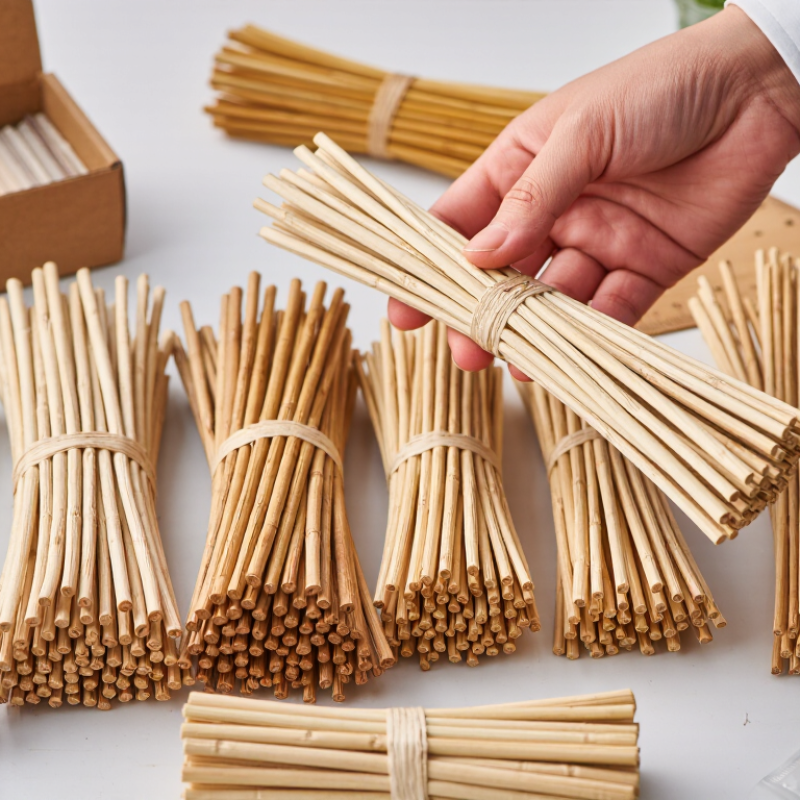
Rattan reed sticks vary by structure, processing, and intended use. Round reeds are common for aroma diffusers because their natural channels help carry liquid upward. Split or flat reeds suit weaving, decorative panels, and small craft projects. Peeled reeds usually have a smoother surface, while unpeeled pieces retain more natural texture. Check the cut ends carefully. Clean, open channels matter more than a perfectly uniform color.
Grades should be judged by measurable details, not attractive photographs. Compare diameter, length, straightness, moisture level, surface cleanliness, and breakage rate. For diffuser reeds, ask about absorption speed and oil compatibility through a sample test. For weaving, flexibility and consistent width are more important. A reliable supplier should provide packing details, inspection records, and clear tolerances. Natural material will show variation. That is normal.
I once accepted a batch with excellent color but weak, brittle ends. It looked better than it performed. A small mistake. Request samples from different production lots before placing a large order. Store the sticks in dry, ventilated cartons, away from strong odors and direct sunlight. Confirm whether the material is air-dried or kiln-dried, since drying affects strength and moisture stability. Buyers should also verify origin documents and import requirements for their destination market. Suppliers may describe grades differently, so written specifications prevent costly misunderstandings.
Checking Material Quality, Dryness, Strength, and Surface Finish
Global buyers should inspect rattan reed sticks before discussing price or volume. Material quality begins with the correct species, mature growth, and consistent diameter. Ask for the harvest area, processing date, and batch traceability. A reliable supplier should provide current photos and representative samples. Reject sticks with active mold, insect holes, soft cores, or sour odors. Small dark marks are not always defects; natural variation can be acceptable.
Check dryness with a calibrated moisture meter at several points, not only the outer skin. Uneven moisture often causes curling, cracking, or mold inside packed cartons. Compare readings with the agreed specification and record them during inspection. Let samples rest in the destination climate for several days. This step is easy to skip. It should not be. Over-dried reeds may feel light but become brittle during weaving. Under-dried reeds may pass a quick visual check and fail later.
Test strength by bending samples slowly, then examine splitting at the ends and along the grain. Do not judge strength from one perfect stick. Use samples from the center, edges, and different bundles. Surface finish should feel smooth, without sharp fibers, sticky residue, excessive dust, or unstable dye. Rub the surface with a clean white cloth. Check color transfer under natural light. Packaging also matters; compressed bundles can deform good material. I would keep failed samples for comparison, because memory is unreliable. Specifications should include tolerance ranges, inspection methods, and corrective actions before shipment.
Matching Stick Dimensions and Specifications to Your Project
7 Tips for Buying Rattan Reed Sticks for Global Buyers
Matching dimensions to the project prevents costly rework. Measure diameter at three points, not one. A 2–4 mm reed may suit basket weaving, while 6–10 mm sticks offer better frame support. Confirm usable length after trimming. A listed 2-meter stick may lose several centimeters at rough ends. Check straightness too. Curved pieces can create visible gaps in chair backs and lampshades.
Ask for diameter, length, moisture, and bundle tolerances in writing. For repeat orders, request a sample bundle with calipers and a moisture meter. Many buyers overlook the core. Hollow or thin-walled reeds bend more easily, although they may reduce weight. Keep tolerances realistic, perhaps ±0.5 mm for fine weaving and ±1 mm for larger structural work. That is not universal. Your prototype should decide. I have seen specifications copied from old projects without checking the actual mold or weaving pattern.
Sourcing also needs evidence. The FAO Global Forest Resources Assessment 2020 reports 4.06 billion hectares of global forest, but this figure does not prove responsible rattan harvesting. Request harvest origin, treatment details, and current inspection records. The International Trade Centre’s Trade Map uses HS 4602 for many basketry and plaiting articles, showing why customs descriptions may not identify stick dimensions clearly. Write dimensions separately on purchase documents. Include acceptable color variation, straightness limits, and packaging protection. A wet container can ruin careful measurements. Ask for photos before shipment. Small details matter.
Evaluating Suppliers, Certifications, Samples, and Production Capacity
Global buyers should judge rattan reed sticks through evidence, not polished catalogs. FAO’s State of the World’s Forests 2022 reports that 1.6 billion people depend on forests for livelihoods. That makes responsible sourcing commercially important.
Ask suppliers for harvest-region details, business licenses, traceability records, and recent audit reports. Certifications can help, but they are not automatic proof of quality. Verify certificate scope, expiry dates, and covered facilities.
Request documents for legal origin, treatment, and destination-country phytosanitary requirements. A certificate without batch-level records is a weak signal.
Samples should represent normal production, not carefully selected pieces. Request several bundles from different batches.
Measure diameter
length
moisture
straightness
color consistency
surface cracks.
A simple moisture check can reveal storage problems. Also test bending, cutting, odor, and resistance to mold after controlled storage.
The FAO Global Forest Resources Assessment 2020 recorded forests covering about 4.06 billion hectares, but that figure says nothing about one supplier’s usable rattan supply. Capacity must be verified separately.
Ask for monthly output, current utilization, drying equipment, worker numbers, lead times, and backup raw-material sources. Review production photos or arrange an independent inspection.
Small suppliers may offer excellent craftsmanship, yet their capacity claims can be optimistic. I have learned that one successful sample proves very little.
Check repeatability, packaging strength, rejection rates, and communication during a trial order. Industry data offers context; physical evidence supports the purchase decision.