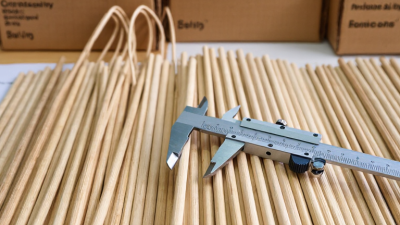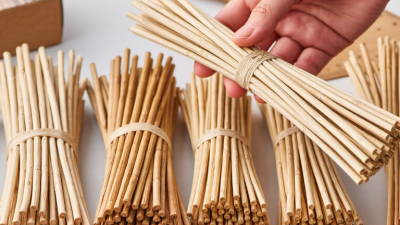
Leave Your Message

China Top Fiber Reed Stick Suppliers Wholesale?

China Top Fiber Reed Stick Suppliers Wholesale? This question matters to fragrance brands, hotel amenities, and private-label retailers seeking stable supply. The global home fragrance market continues to expand. Grand View Research estimates its value reached about USD 13 billion in 2023, with steady growth expected through 2030. That growth increases demand for reliable diffuser components, including Fiber Reed Stick products.

China remains a major manufacturing base for fragrance accessories. Experienced suppliers can offer different lengths, diameters, colors, packaging formats, and private-label services. However, wholesale purchasing should involve more than a competitive quotation. Buyers should inspect fiber density, surface consistency, absorption speed, odor neutrality, and liquid release performance. A reed that looks clean may still diffuse unevenly. Small details matter.

Industry research from Mordor Intelligence also identifies home fragrance as a growing consumer category, supported by premium packaging and long-lasting scent preferences. This trend makes supplier quality control increasingly important. Ask for production samples, batch specifications, test records, and export documentation. Review MOQ, lead time, carton protection, and replacement policies before signing an order. Sustainability deserves attention, too. Suppliers should clearly explain fiber composition and packaging materials. Claims about biodegradability require evidence, not attractive wording. No supplier is perfect. Even strong factories may need clearer communication or improved sampling. This guide compares China’s leading Fiber Reed Stick suppliers through practical purchasing standards, manufacturing experience, and verifiable wholesale capabilities.
China Top Fiber Reed Stick Suppliers Wholesale?

What Are Fiber Reed Sticks and How Are They Used?

What Are Fiber Reed Sticks and How Are They Used?

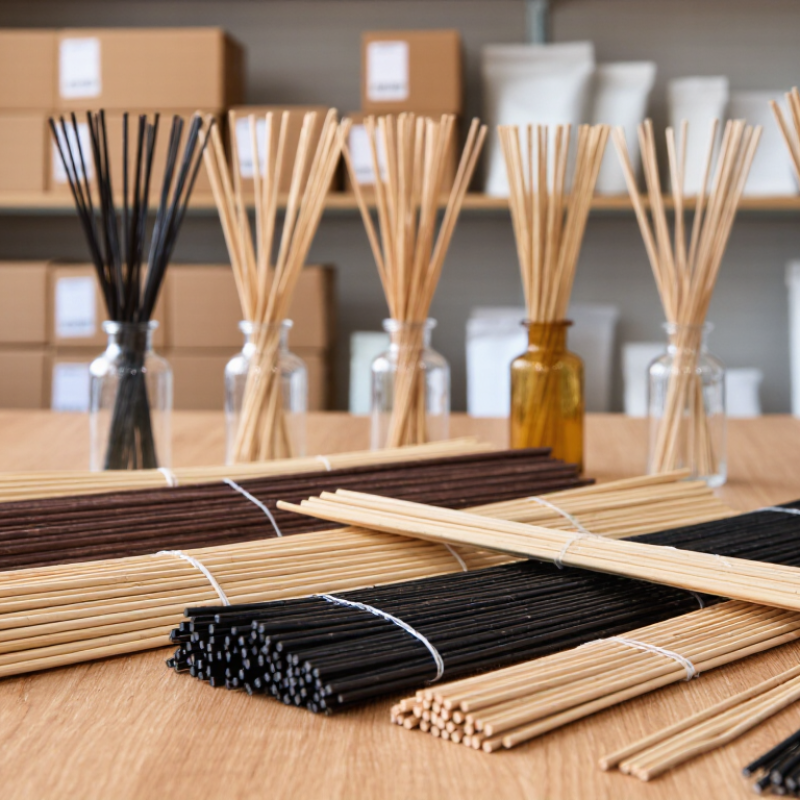
Fiber reed sticks are porous fragrance applicators made from engineered polyester, polypropylene, or other absorbent fibers. Unlike natural rattan, they contain designed microchannels that move scented liquid upward through capillary action. The sticks then release fragrance into surrounding air. They are commonly used in reed diffusers, car fresheners, hotel rooms, offices, and private homes.

They need no flame or electricity.

In practical diffuser testing, fiber reeds often provide steadier output than natural reeds because their internal structure remains more uniform. Diameter, fiber density, length, and surface finish all affect evaporation. A 3 mm stick may release fragrance differently from a 4 mm stick, even in the same bottle. That detail is easy to underestimate.

Grand View Research reports that the global home fragrance market is projected to grow at about 5.8% annually from 2024 to 2030. This growth supports demand for consistent diffuser components. Another industry assessment from Fortune Business Insights also identifies rising interest in convenient, low-maintenance fragrance products. However, market estimates differ by region and product definition, so buyers should not treat one figure as absolute.

For wholesale sourcing, request absorption tests, dimensional tolerances, odor compatibility results, and packaging specifications. Test samples with the intended fragrance oil before placing a large order. A visually clean stick can still perform poorly. Color stability and liquid seepage deserve attention, too. Suppliers should provide batch records and material declarations, although paperwork alone cannot replace real-use testing.

How Fiber Reed Sticks Are Manufactured in China

Fiber Reed Stick Manufacturing in China

China’s fiber reed sticks usually begin with polyester or similar synthetic filaments. Textile Exchange’s Materials Market Report 2024 reports that polyester represented about 57% of global fiber production in 2023. This explains its strong role in diffuser accessories. The material offers consistent thickness, low moisture absorption, and scalable production.

The process starts with drying polymer granules. Extruders then melt and push the material through fine spinnerets. Multiple filaments are combined into a porous stick, often measuring 3 to 5 millimeters in diameter. Cutting machines produce uniform lengths, while polishing removes loose fibers. Some factories add surface treatments to improve liquid uptake. Small details matter.

Quality control normally checks diameter, straightness, odor neutrality, capillary performance, and breakage resistance. A practical test places sticks in a standard fragrance liquid and measures visible liquid rise over time. The exact testing method can vary, which remains a weakness in this sector. Buyers should request batch records, material declarations, and laboratory results rather than relying only on samples. Grand View Research has identified continued growth in the global air freshener market, increasing pressure for stable, repeatable components. In wholesale production, packaging also deserves attention. Clean sleeves, dry storage, and sealed cartons help prevent dust and moisture damage before shipment. Errors still happen. A visually perfect stick may absorb unevenly after several days.

China Top Fiber Reed Stick Suppliers Wholesale? - How Fiber Reed Sticks Are Manufactured in China

Manufacturing Dimension Typical Production Information Wholesale Relevance Common Quality Check
Primary Material Regenerated cellulose fiber is commonly formed into a thermoplastic composite using a polymer binder and processing additives. Material selection influences stiffness, surface finish, odor neutrality, and unit cost. Review material declarations, color consistency, odor, and compliance documents required for the destination market.
Fiber Preparation Cellulose fibers are dried, blended, and prepared to achieve a uniform moisture level before compounding. Stable moisture control helps reduce warping, bubbles, surface defects, and dimensional variation. Check moisture control records, fiber distribution, and appearance of trial samples.
Compounding The fiber and binder are mixed under controlled heat and shear to create a consistent compound or pellet feedstock. Consistent compounding supports repeatable color, strength, flexibility, and processing performance. Inspect batch records, melt consistency, visible fiber dispersion, and sample break resistance.
Extrusion or Molding The compound is shaped into continuous rods through extrusion or formed into individual pieces using suitable tooling. Tooling determines the reed diameter, profile, surface texture, and production efficiency. Measure diameter, straightness, length, and profile against the approved sample.
Cooling and Stabilization Freshly formed rods are cooled and stabilized before cutting, printing, coating, or final assembly. Proper cooling reduces bending and helps maintain consistent dimensions during packing and transport. Check straightness, shrinkage, surface marks, and deformation after conditioning.
Cutting and Finishing Continuous rods are cut to the requested length, and ends may be trimmed, rounded, chamfered, or polished. End finishing affects user safety, insertion into diffuser bottles, and overall presentation. Inspect burrs, sharp edges, end squareness, cut length, and surface cleanliness.
Color and Surface Options Available finishes may include natural fiber tones, solid colors, matte surfaces, glossy surfaces, or customized color matching. Color and texture can be coordinated with packaging, seasonal collections, or private-label product requirements. Compare color samples under consistent lighting and check for streaks, spots, and coating adhesion.
Typical Dimensions Common reed diffuser formats include approximately 20–30 cm lengths, with diameters often around 2–4 mm, depending on the design. Length and diameter affect packaging fit, visual balance, fragrance diffusion, and carton utilization. Use calibrated gauges and rulers to verify dimensions on samples from each production batch.
Absorption and Diffusion Performance Fiber-based reeds are designed with a porous structure to draw fragrance liquid upward by capillary action. Performance depends on fiber structure, liquid viscosity, reed dimensions, and fragrance formulation. Conduct a controlled soak test using the intended fragrance base and record liquid uptake and wetting height.
Packaging Formats Wholesale packing may use paper sleeves, polybags, inner boxes, cartons, or customized retail-ready packaging. Packaging configuration affects packing labor, shipping volume, protection, and minimum order quantities. Check count per pack, barcode or label accuracy, carton strength, and protection against bending.
Production Lead Time Standard repeat orders commonly require several weeks; new colors, tooling, testing, and custom packaging may extend the schedule. Confirm the schedule for sampling, approval, mass production, inspection, and shipment before placing an order. Request a written production timeline with approval milestones and shipment-ready dates.
Export and Compliance Documents Depending on the destination and intended use, buyers may request material declarations, safety information, testing reports, and origin or shipping documents. Document requirements should be agreed before production because testing and labeling rules vary by market. Verify that documents match the actual material, product specification, production batch, and destination-market requirements.

Note: Specifications, testing requirements, minimum order quantities, and lead times vary according to material formulation, tooling, packaging, and destination-market regulations.

Key Criteria for Evaluating Chinese Fiber Reed Suppliers

China Top Fiber Reed Stick Suppliers Wholesale?

Key Criteria for Evaluating Chinese Fiber Reed Suppliers

Wholesale buyers should test performance before comparing prices. Mordor Intelligence’s 2024 reed diffuser market review forecasts annual growth of about 4% through the decade. That growth increases supplier choices, but not necessarily quality. Ask for fiber composition, diameter tolerance, moisture control, and production capacity. A reliable supplier should provide batch records, material specifications, and recent laboratory results. Test ten sticks from each sample carton. Measure absorption speed, liquid rise, odor release, bending, and surface shedding. One attractive sample proves little.

Tips: Request three production batches, not one sample. Use the same fragrance oil during comparison. Record results after 24, 48, and 72 hours.

Supplier evaluation should also include factory experience and quality systems. ISO 9001 certification supports process control, but it does not guarantee strong diffuser performance. The supplier should explain drying conditions, cutting accuracy, packaging protection, and rejection rates. Ask for a trial order before accepting a large MOQ. Confirm export documents and carton details carefully. Poor packaging can bend sticks before they reach your warehouse. That detail is often ignored.

Price still creates bias. I have seen buyers accept small defects because the quotation looked efficient. That decision can increase replacement costs later. Compare landed cost, consistency, lead time, and communication speed. A useful supplier answers technical questions clearly and admits limitations. Sometimes the cheapest fiber is simply less uniform. That deserves a second test.

How to Compare Wholesale Prices, Quality, and Minimum Orders

China Top Fiber Reed Stick Suppliers Wholesale?

How to Compare Wholesale Prices, Quality, and Minimum Orders

When comparing China fiber reed stick suppliers, wholesale price is only the starting point. A low quote may exclude color matching, packing, or export cartons. Ask for a complete price sheet. Check length, diameter, fiber density, finish, and unit packaging. Compare equal specifications, not attractive totals. A 3.0 mm reed and a 4.0 mm reed will not perform or cost the same. Keep written records. Small details matter.

Quality needs a practical test. Request samples from the same production batch when possible. Place them in identical diffuser bottles with identical oil. Observe absorption, scent release, bending, shedding, and color stability over several days. I also check cut ends and bundle consistency by hand. A neat sample can hide uneven mass production. That happened to me once. It made the inspection process more cautious, not perfect.

Minimum order quantity should match your sales plan and storage space. Ask whether the MOQ applies to each color, size, or total order. Confirm sample fees, lead time, replacement policy, and carton dimensions. A supplier offering 10,000 pieces may be cheaper per unit, but slow inventory ties up cash. Request a small trial order before scaling. This costs more initially, but it exposes problems early.

Steps for Choosing and Importing a Reliable Chinese Supplier

China Top Fiber Reed Stick Suppliers Wholesale?

Choosing and importing a reliable Chinese supplier starts with a clear product brief. Specify fiber type, stick length, diameter, color, surface finish, packaging, and acceptable tolerance. Vague requests often produce inconsistent samples. That becomes expensive later.

Request business details, factory photos, production capacity, and recent quality records. A video call can reveal storage conditions and basic equipment. Ask for samples from the actual production line, not only polished showroom pieces. Test flexibility, odor, coating durability, and breakage after shipping. Small details matter.

Compare at least three quotations using the same specifications. Check the minimum order quantity, lead time, payment terms, and delivery conditions. Confirm whether prices include export packaging and required documents. A pre-shipment inspection can verify quantity, dimensions, carton strength, and labeling. Do not rely on photographs alone.

Keep communication in writing. A signed purchase order should list every agreed detail, including defect limits and replacement procedures. For a trial order, choose a manageable quantity before expanding wholesale volume. Currency changes, port delays, and seasonal production pressure can affect the final cost. I would leave a time buffer, although even careful planning can miss an unexpected delay. Verify import duties and local compliance requirements with a qualified customs professional before payment.