Top Scent Candle Manufacturers for Global Buyers
Global buyers choosing a Scent Candle manufacturer are selecting more than a fragrance and a jar. They are trusting a supplier to make each batch consistent, document materials, and protect delivery schedules. One shipment may contain thousands of glass vessels, cotton wicks, and cartons; small differences in wax, fragrance strength, or wick size can change the burn and scent throw. Details matter.
Yankee Candle founder Michael Kittredge began making candles as a teenager to give his mother a present. His simple account is often summed up in the words, “I made her a candle.” That starting point offers a useful reminder: a candle is both a crafted object and a personal product. For global buyers, the challenge is turning that care into repeatable production. Ask manufacturers how they test burn performance, check fragrance consistency, manage production samples, and handle packaging approvals. Request clear specifications, not just attractive product photos.
The strongest supplier is not always the largest or cheapest. It is the partner whose capabilities match your market, order size, and quality expectations. A factory visit can reveal clean workstations and careful packing; a sample can reveal uneven melting or a scent that fades too soon. Yet no single sample guarantees every future batch. Buyer checks have limits. This guide compares manufacturers through practical criteria, helping importers assess craftsmanship, communication, customization, and production reliability before placing an order.
Understanding Scented Candles and Their Key Components
Top Scent Candle Manufacturers for Global Buyers
Understanding Scented Candles and Their Key Components
A scented candle combines wax, fragrance, a wick, and a heat-safe container. Each part affects how it burns and how the scent reaches a room. Wax holds the fragrance and supports an even burn, while the wick draws melted wax upward. Fragrance oils influence the candle’s character, but a stronger scent is not always better. Too much fragrance can affect burn quality. The vessel should resist heat and sit steadily on a flat surface. Small details matter.
Tips: Ask suppliers what wax and wick types they use, and request burn-test information for the finished candle. Check that the wick stays centered and the flame remains steady. A sample can reveal issues that a product sheet cannot. Test it in a room similar to where customers will use it.
For global buyers, compare candles by more than scent description or appearance. Review ingredient details, vessel dimensions, burn time, and batch consistency. Fragrance can smell different when cold and when burning, so assess both. Also ask how the manufacturer checks each production run. These details help buyers judge quality, though no single test guarantees every candle will perform identically. A little uncertainty remains; that is worth acknowledging when setting expectations.
How Scent Candle Manufacturing Works
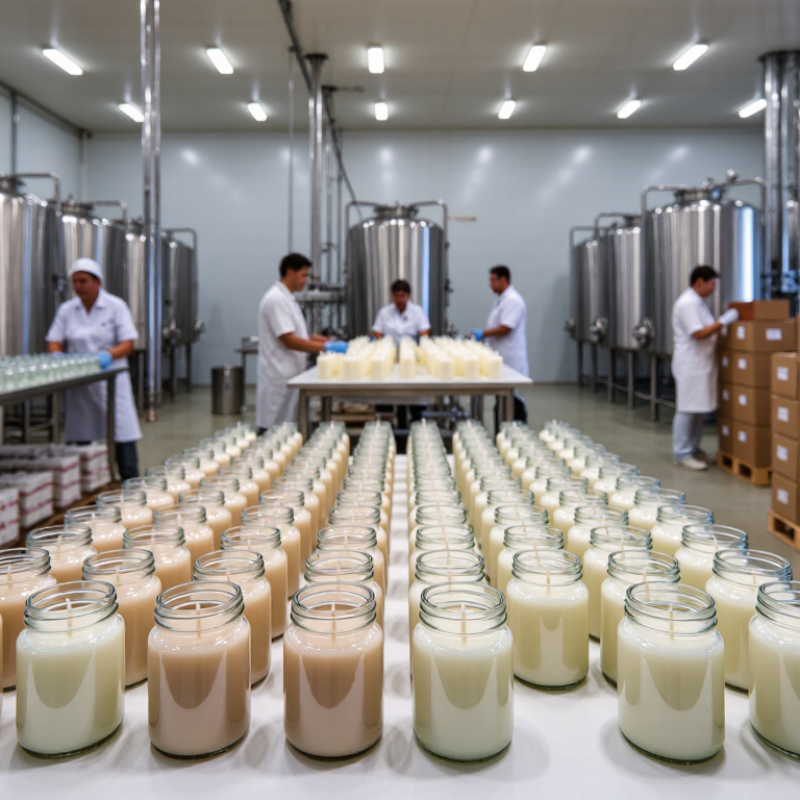
Scent candle manufacturing begins with choosing wax, wick, vessel, and fragrance. The wax is melted in a temperature-controlled tank, then fragrance is blended in before pouring. Timing matters: excessive heat or uneven mixing can weaken the scent or cause surface defects. Small details matter. Wicks are centered with clips or guides, and filled vessels cool on level racks. The National Candle Association estimates that U.S. candle makers use more than one billion pounds of wax each year, reflecting the scale behind this seemingly simple product.
After cooling, manufacturers trim wicks, inspect finishes, and run controlled burn tests. They check flame behavior, soot, tunneling, and scent release across the candle’s life. Fragrance use should follow supplier safety documentation and relevant IFRA Standards for the product category. Batch records help buyers compare samples with later production runs. A smooth top is reassuring, but it proves little about how a candle will burn. Testing takes time, and small-batch results may not perfectly predict a full production run.
Tips: Ask for a sample, burn-test it in a draft-free room, and request the wax type, wick details, fragrance documentation, and batch quality checks. Note the room size and burn duration; scent strength can feel different in a large, ventilated space.
How to Evaluate Scent Candle Manufacturers
Top Scent Candle Manufacturers for Global Buyers
How to Evaluate Scent Candle Manufacturers
Evaluate a manufacturer’s process, not just its sample. Request batch-level records for wax, fragrance, wick, and finished-product testing. A dependable supplier should explain how it checks burn performance, vessel temperature, scent consistency, and soot. Ask for current fragrance documentation, such as an IFRA conformity statement, and confirm that finished candles are tested separately. Samples can mislead. A candle that smells strong in a showroom may perform differently in a larger room.
Grand View Research estimated the global candle market at about US$10.7 billion in 2023, with projected annual growth of 6.8% through 2030. This market context makes production capacity worth checking, but growth figures do not prove quality. Compare minimum order quantities, repeat-order lead times, and documented defect procedures. Ask how the factory handles a batch with uneven melt pools or weak scent throw. I would still treat a flawless sample cautiously; small-batch consistency is harder to judge than one attractive candle.
Tips: Request a recent test report and a production sample from the same batch. Check that labels, cartons, and safety information match your destination market. Clarify who pays for retesting after a formula change. Keep the answers in writing.
Leading Scent Candle Manufacturers for Global Buyers
Leading scent candle manufacturers for global buyers pair fragrance expertise with consistent production. Experienced teams can explain how wax type, wick diameter, and fragrance concentration affect a candle’s burn. Ask for test results covering burn time, vessel temperature, and scent throw. A pleasant sample is not enough.
Small details matter. Compare samples from more than one production batch, not just a single handpicked candle. Check whether the flame stays steady and whether the scent remains balanced after several hours. Request clear specifications, ingredient information, and product documents relevant to your destination markets. Strong manufacturers should answer these questions plainly, rather than relying on broad quality claims.
Global orders also depend on practical coordination. Confirm minimum order quantities, lead times, carton strength, and how samples are approved before production. Ask how the manufacturer handles a delayed shipment or a batch that differs from the approved sample. Even a capable factory may miss a subtle scent note during scale-up; that is worth acknowledging. Keep approval samples and written specifications for comparison, and leave time for adjustments before placing a large order.