
Leave Your Message

What Are the Top Types of Car Aroma Diffusers?

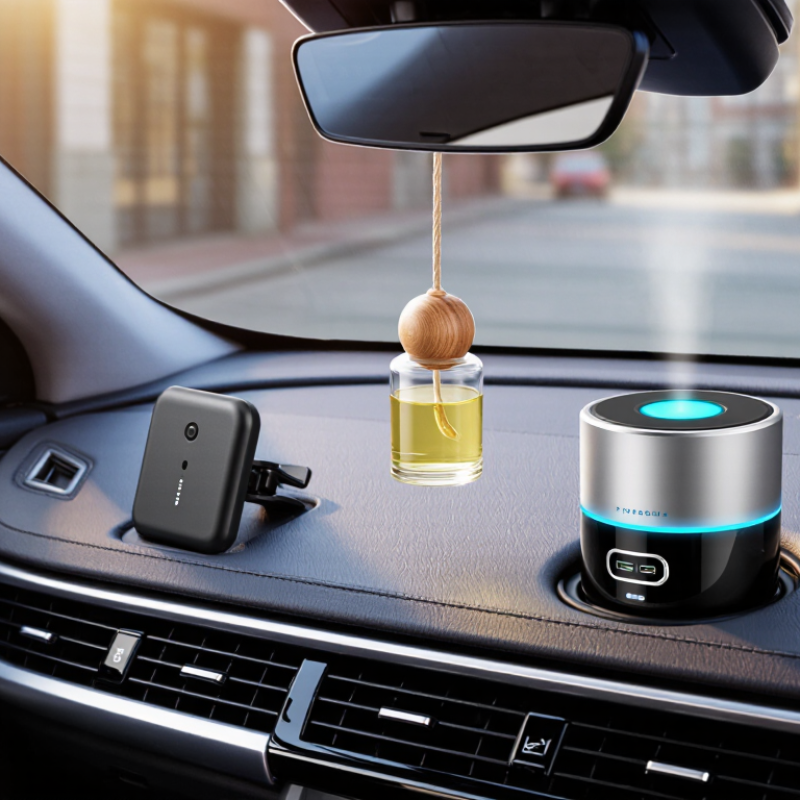
A car’s cabin is a small space, so even a light fragrance can feel strong during a short commute. A Car Aroma Diffuser offers several ways to scent that space, from simple vent clips to powered devices with adjustable settings. Some models hold a scented pad near an air vent. Others release fragrance from a hanging bottle, a solid insert, or a USB-powered unit. There are practical differences. A vent clip is easy to install, while an electric diffuser may offer more control but needs power and occasional cleaning. Small details matter, too: where the device sits, how easily it refills, and whether its scent overwhelms the cabin. No type suits every driver.

This guide compares the main types of car aroma diffusers and explains what each one does well. It considers scent intensity, upkeep, ease of use, and fit with different vehicle interiors. A clip-on design may suit someone who wants a compact option, while a powered model may appeal to drivers who prefer adjustable output. Still, advertised performance does not always match real-world experience. Cabin temperature, airflow, and personal sensitivity can change how a fragrance smells and lasts. Keep devices secure, follow the manufacturer’s instructions, and avoid placing them where they could distract the driver or obstruct visibility. The right choice is usually the one that feels comfortable on an ordinary drive, not merely the one with the most features. There is a trade-off. A simpler diffuser can be easier to maintain, though its scent control may be limited.
What Are the Top Types of Car Aroma Diffusers?

How Car Aroma Diffusers Work: Passive Evaporation and Powered Dispersion

What Are the Top Types of Car Aroma Diffusers?

How Car Aroma Diffusers Work: Passive Evaporation and Powered Dispersion

Car aroma diffusers generally work through passive evaporation or powered dispersion. Passive designs use a scented liquid or solid material exposed to moving cabin air. A vent clip, for example, releases fragrance as air passes over its surface. Heat and airflow can change how quickly the scent fades, so the first drive may smell stronger than later ones. Simple, but uneven.

Powered diffusers use a battery or vehicle power to disperse fragrance, often through a small fan, vibration, or controlled heating. Some models let drivers adjust output, though settings do not guarantee an even scent throughout the cabin. Placement matters: a diffuser near a vent may spread fragrance more quickly, while one tucked low can produce a faint, localized smell. The distinction is not always neat; some products combine passive materials with powered airflow.

The broader category is commercially significant. Grand View Research’s 2023 air freshener market report estimated the global market at about USD 12.7 billion, reflecting demand across home and vehicle settings. That figure describes the market, not proof that any diffuser performs better. For practical comparison, look for clear instructions, refill details, and adjustable output. A small cabin can become overpowering quickly. Sometimes, less is enough.
Vent-Clip Diffusers: Using Cabin Airflow to Distribute Fragrance

Vent-clip car aroma diffusers attach to an air vent and use the cabin fan to carry fragrance through the interior. Most have a small housing that holds a scented insert or liquid reservoir. As air passes over the fragrance, it picks up scent and moves it into the cabin. The effect depends on airflow, not just the diffuser itself. A low fan setting may produce a faint aroma, while stronger airflow can make it noticeable within minutes. Not magic.

Placement matters. A vent near the driver may make the scent feel stronger than one farther back, and direct airflow can dry some inserts faster. On a cold morning, you may notice little fragrance until the heater runs; on a warm day, the scent can seem sharper. These changes can be annoying, and vent clips are not perfectly consistent. Keep the unit clear of vent controls, check it periodically for leaks or loose parts, and follow its care instructions. If the fragrance feels overpowering, reduce the airflow or remove the diffuser for a while. A pleasant cabin scent should stay in the background.

USB Diffusers: How 5-V Power Drives Compact Scent Devices

USB car aroma diffusers use a 5-volt connection, commonly supplied by a vehicle’s USB port or a suitable adapter. That low-voltage setup suits compact devices, but it does not tell you how strongly a diffuser will scent the cabin. Airflow, wick size, and oil delivery also matter. Small, but useful.

Many USB models use a tiny fan to move air across a scented pad. Others warm a replaceable absorbent core or use a different method to disperse fragrance. A fan-based unit may give a gentle, steady scent, while a passive pad often stays subtle. Results vary with cabin size, ventilation, and temperature. A mild scent can disappear quickly with the windows open.

Check the diffuser’s stated input requirements before plugging it in. USB ports can differ in available current, and a device may perform poorly if its power needs are not met. Keep it clear of driving controls and surfaces that could be marked by leaks or residue. It is easy to focus on the 5-volt figure and overlook cleaning. That detail deserves more attention. A quick wipe and occasional pad replacement can help prevent old fragrance from lingering.

12-V Car Diffusers: Vehicle Power, Controls, and Mist Output

12-V Car Diffusers: Vehicle Power, Controls, and Mist Output

A 12-V car diffuser draws power from the vehicle’s accessory socket, so check the socket location and fit before buying. Some models start with the ignition; others have a separate switch or timer. That small difference matters when you park. Controls should be easy to reach without taking your eyes off the road. Mist output also varies: a compact cabin may need only short bursts, while a larger vehicle can feel under-scented at the same setting. More mist is not automatically better.

Grand View Research’s 2023 car air freshener market analysis estimated the global market at about USD 2.5 billion. That figure describes the broader category, not diffuser performance, but it signals strong consumer interest in in-car fragrance. Compare adjustable output, reservoir size, and refill access instead of relying on market popularity. A diffuser’s actual effect can change with cabin ventilation and temperature. This is easy to overlook.

Tips: Test the lowest mist setting first. Keep the unit upright, clear of pedals and controls, and follow its vehicle-use instructions. Check whether it switches off with the ignition. A tiny reservoir may need frequent refills; that part is less convenient than it looks.

Ultrasonic and Nebulizing Diffusers: Water-Based vs. Waterless Delivery

Ultrasonic and nebulizing diffusers deliver fragrance differently. An ultrasonic unit uses water and vibration to release a cool mist. In a parked car, its small reservoir may need frequent refilling, and bumps can cause spills. The scent also arrives diluted, which can feel gentler in a compact cabin. Keep the device upright and away from controls. Small details matter.

A nebulizing diffuser uses airflow to disperse fragrance without water. Its output can feel more direct, but concentrated aroma may become overpowering in a small, closed space. It may also use essential oil faster. Grand View Research valued the global essential oils market at US$23.74 billion in 2023 and projected a 7.9% compound annual growth rate through 2030. That report describes the wider oils market, not car diffusers specifically, so it should not be read as proof that one diffuser type is more popular. In practice, cabin size, ventilation, and personal sensitivity can matter more than the technology. I would test a low setting first. Not perfect science.