




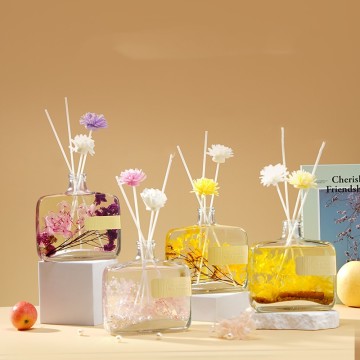

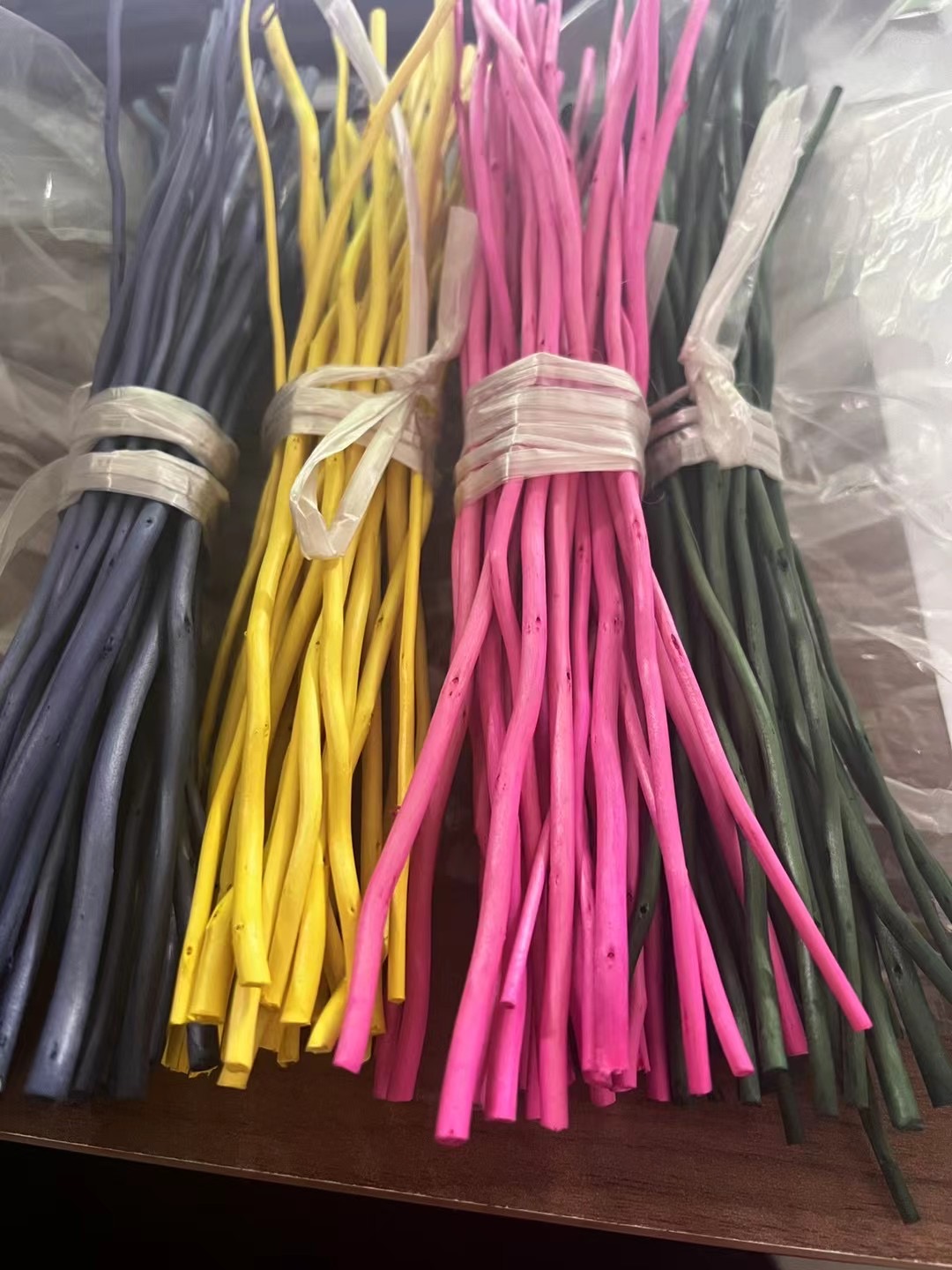
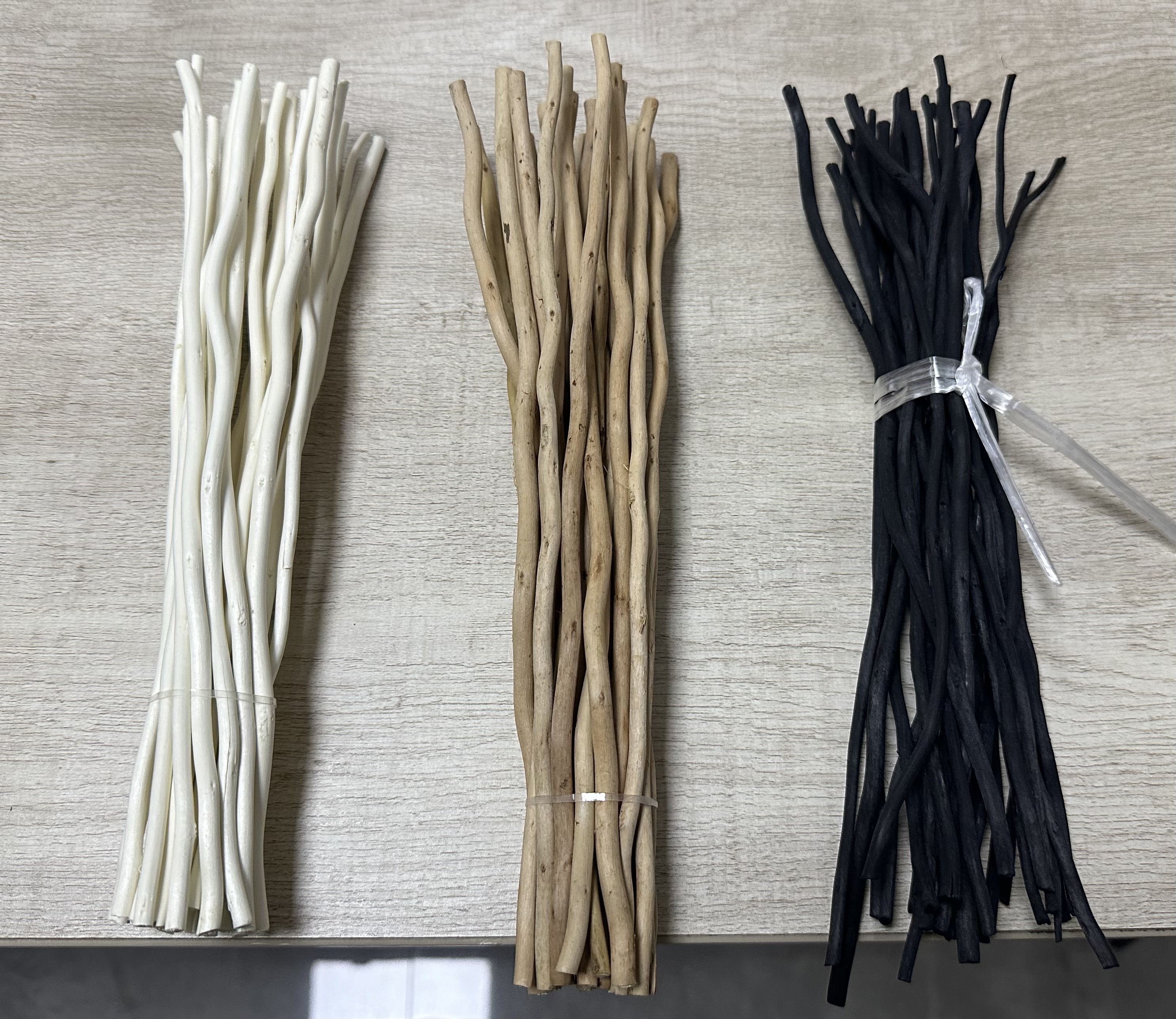
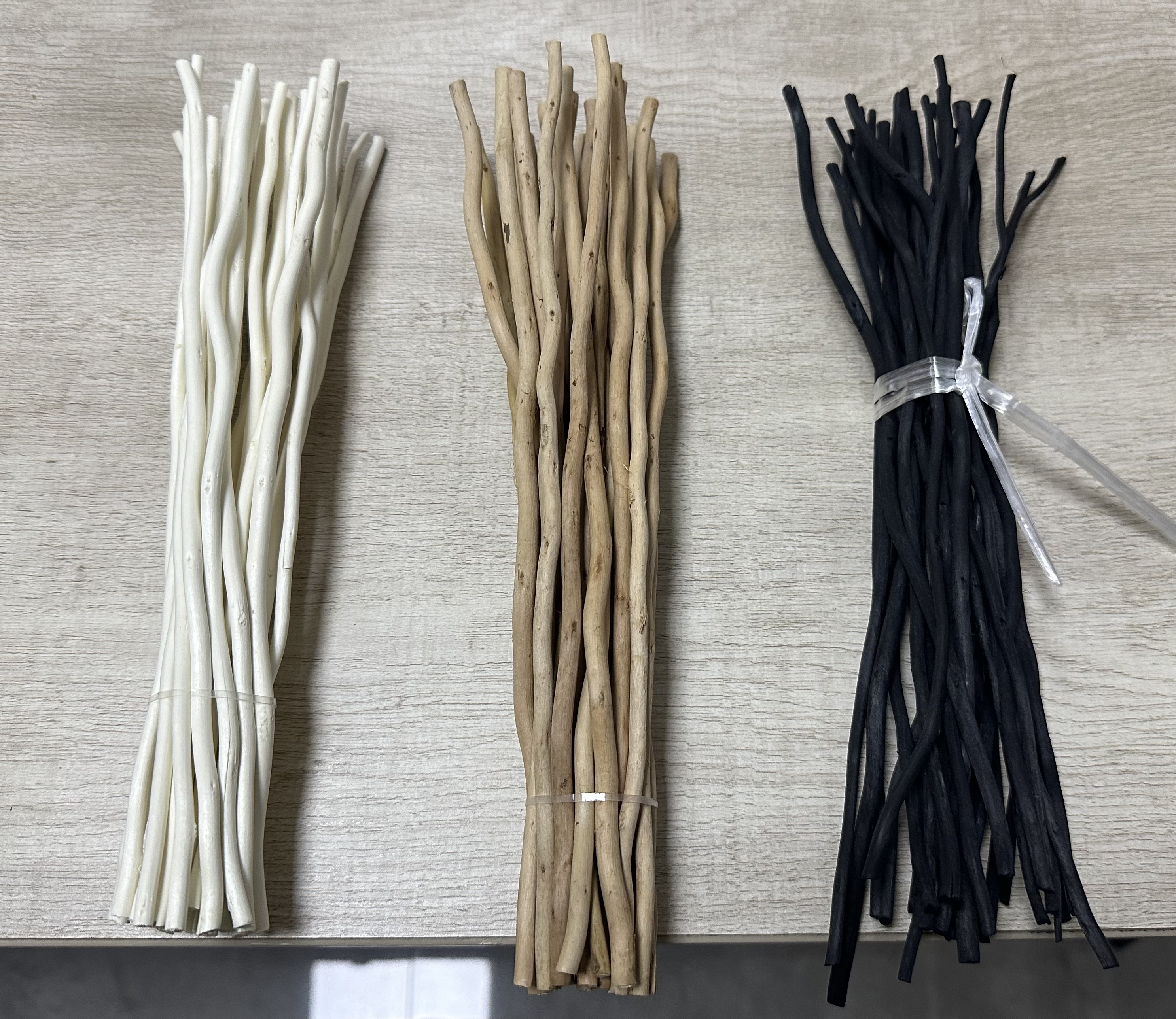
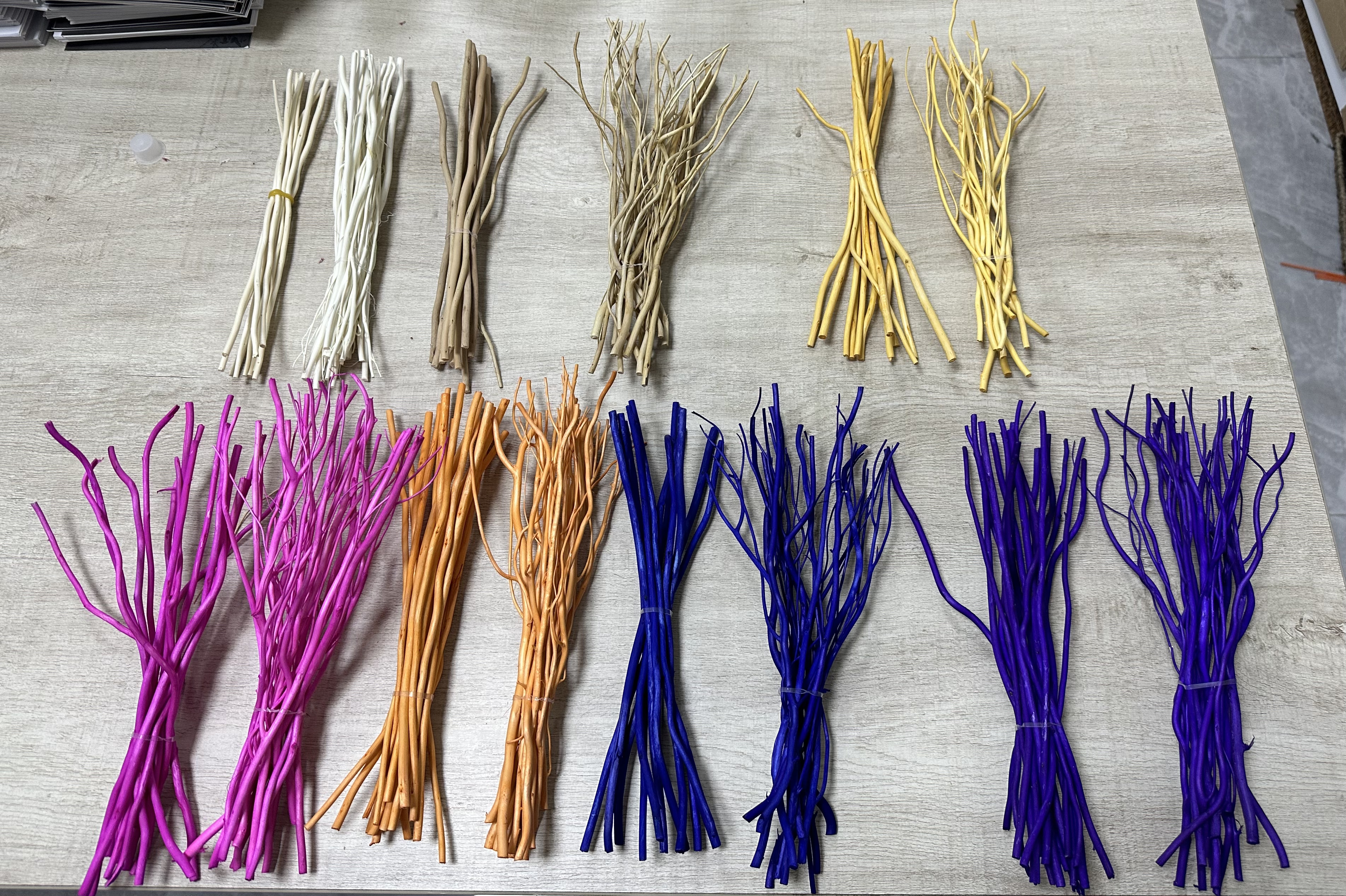
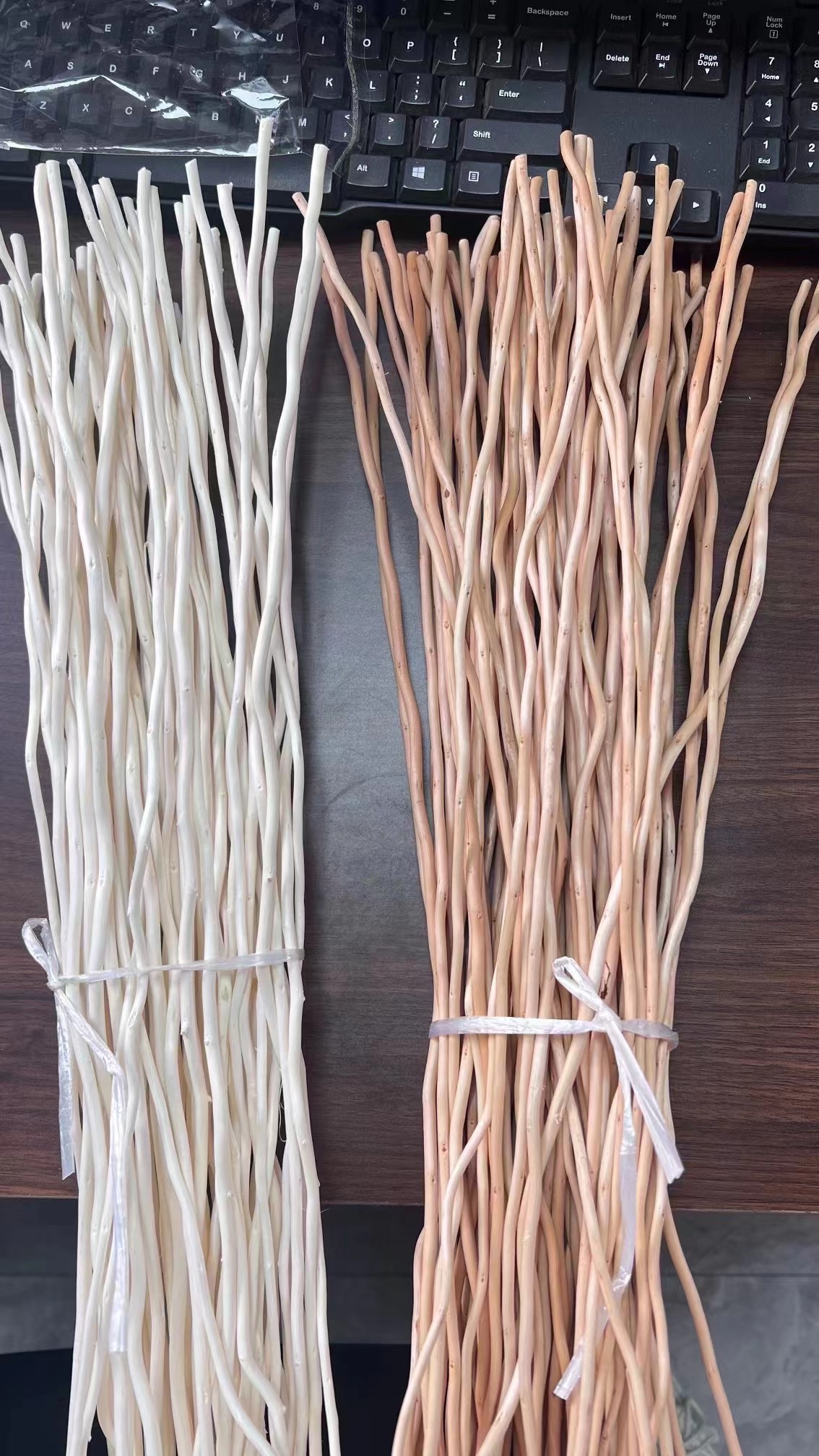
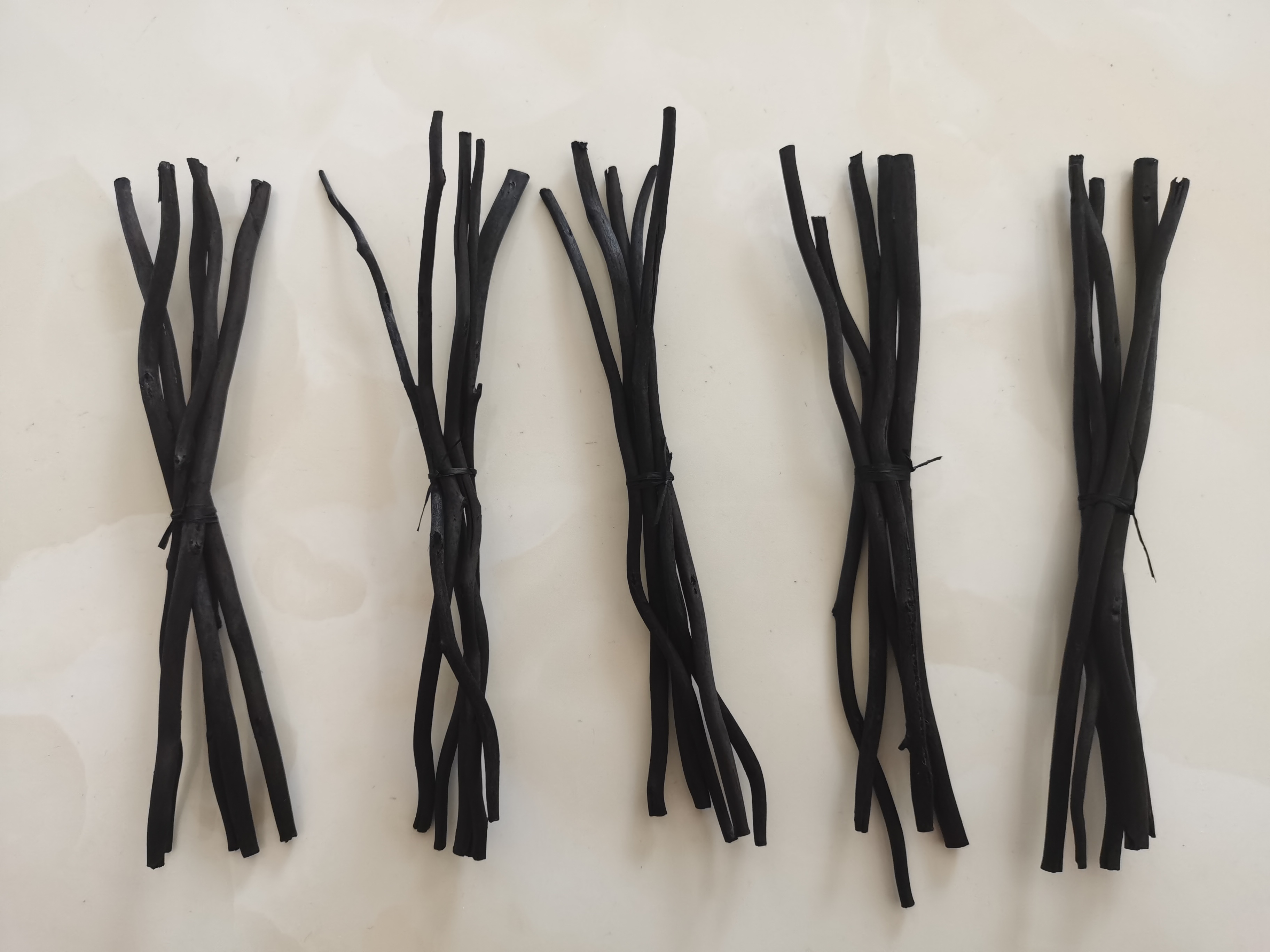
Color willow wicker air purification deodorizing volatile stick
The pore structure is conducive to absorption and volatilization
there are many tiny pores in the xylem of willow branches, like a miniature "storage room", which can fully absorb aromatherapy liquid. When the aromatherapy liquid enters the pores, it will gradually evaporate into the air over time. These pores provide a large gas-liquid contact area, speeding up the process of the aromatherapy liquid from liquid to gas, so as to continue to emit a stable aroma.
Increased surface area promotes diffusion
The fibrous structure of willow branches gives it a large specific surface area. When the aromatherapy solution is attached to the willow branch surface and internal fibers, the larger surface area means that more aromatherapy molecules can come into contact with the air, accelerating the diffusion rate of the aroma. Compared to smooth materials, willow branches can make the aroma spread more quickly in the surrounding space.
Fiber characteristics affect the dispersion rate
willow fiber has a certain degree of flexibility and water absorption. Flexibility makes the volatile rod not easy to break after absorbing aromatherapy liquid, and can maintain the structure integrity to continue to emit aroma. The moderate water absorption ensures that the volatile rod can absorb enough aromatherapy liquid without being too humid to cause the aroma to be blocked. At the same time, the space between the fibers also provides a channel for the movement of aromatherapy molecules, affecting the rate and uniformity of aroma.
Wood components and aroma integration
The wood components of willow branches themselves may contain some natural volatile substances, although the content is small, but after mixing with the aroma of aromatherapy liquid, it is possible to produce a unique olfactory experience, so that the final aroma is richer and more hierarchical.