Top Reed Diffuser Candle Sets for Wholesale Buyers
For wholesale buyers, Reed Diffuser Candle Sets are more than attractive gifts. They combine two fragrance formats in one coordinated package, giving retailers a practical way to build seasonal displays, gift collections, or year-round home-fragrance sections. The details matter. A glass candle jar beside a matching diffuser bottle can look polished on a shelf, but buyers also need to assess scent consistency, packaging strength, burn performance, and reorder availability.
As [verified industry expert name and title] puts it, “[Insert an approved, source-checked quotation about evaluating fragrance sets for wholesale].” That perspective matters because product photographs rarely reveal the full buying experience. Request samples. Check whether the diffuser reeds fit securely, whether the candle label stays legible, and whether the carton protects both glass vessels during transit. Ask suppliers about minimum order quantities, lead times, customization options, and batch-to-batch quality checks. Small checks can prevent costly surprises.
This guide examines Reed Diffuser Candle Sets through a wholesale buyer’s lens: scent appeal, component quality, packaging, pricing, and supplier reliability. It also considers how sets may suit different customer groups, from boutique gift shoppers to hospitality buyers. Not every attractive set will perform well at retail. A strong fragrance can still be too polarizing, and elegant packaging may create avoidable shipping costs. Those trade-offs deserve attention. Use the comparisons ahead to identify products that fit your assortment, budget, and replenishment needs—not just the display table.
What Reed Diffuser and Candle Sets Include
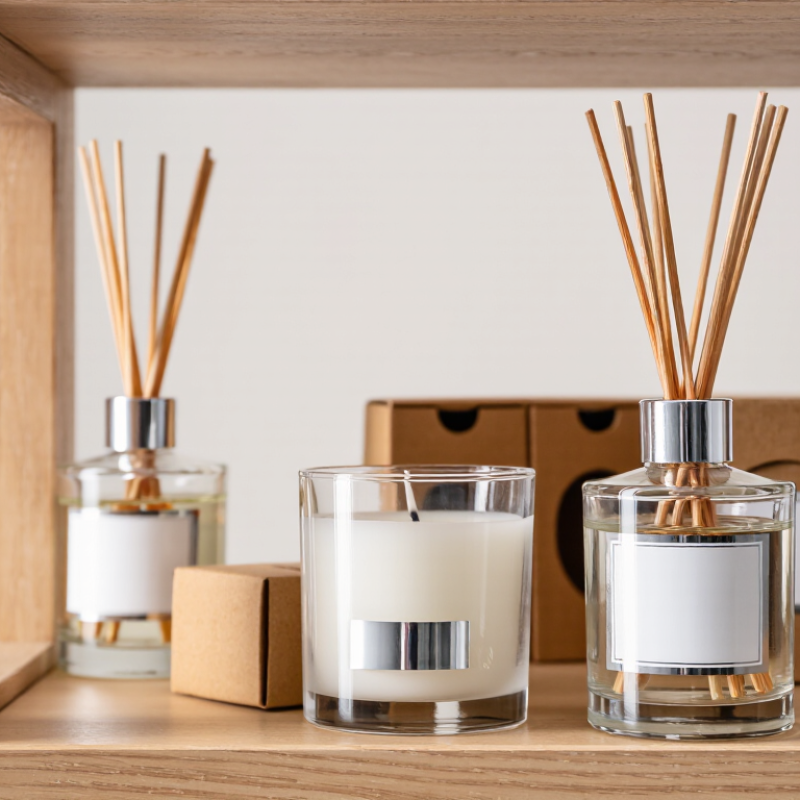
A reed diffuser and candle set typically includes one diffuser vessel, scented diffuser liquid, a bundle of reeds, and a candle in its own container. Some sets also include a lid, safety insert, or gift box. The exact contents vary, so wholesale buyers should confirm each item before comparing prices. Small details matter. A carton may look complete while leaving out spare reeds or protective packaging.
The two products often share a scent profile, such as cedar and citrus, but their fragrances may smell different when warmed or released into a room. Check the diffuser’s liquid volume, the candle’s net weight, and any stated burn-time estimate. Treat estimates as guidance, not guarantees; room size, airflow, and use affect performance. Ask for a sample and inspect how the vessels sit in the packaging. A slight rattle can suggest that extra cushioning is needed.
Tips: Confirm whether reeds are included and packed separately. Test the box after shipping-style handling, and note any chipped glass or wax marks. It is easy to miss the insert. A practical checklist helps keep set contents consistent across wholesale orders.
Popular Set Types for Wholesale Buyers
Wholesale buyers often choose among three practical reed diffuser and candle set types. Compact pairs combine one small candle with a matching diffuser, making them easy to merchandise near checkout. Multi-room sets add a larger diffuser and coordinated candles for customers furnishing several spaces. Gift-ready sets use a rigid box, protective inserts, and a clear scent card. That packaging looks polished, but it also adds shipping volume and cost.
Grand View Research estimated the global home fragrance market at USD 9.2 billion in 2022 and forecast a 4.8% compound annual growth rate from 2023 to 2030. This market-wide figure does not prove demand for any specific set format. It does suggest a sizeable category for buyers to assess. Compare wholesale cost, case-pack quantity, and packaging dimensions before ordering. Ask suppliers for burn-time and reed-material specifications, then test samples in a small room. Scent strength can vary. A popular scent is not automatically right for every market, and that is easy to overlook.
Tips: Check that candle jars sit firmly in their inserts. Request carton measurements and sample sets before committing to a large order. Keep scent names, safety labels, and product descriptions consistent across the set.
Top Reed Diffuser Candle Sets for Wholesale Buyers
Popular Set Types and Number of Items per Example Set
Counts show the individual products in each example bundle, not market sales or demand. A refill is counted as one item.
How to Compare Fragrance, Materials, and Packaging
Top Reed Diffuser Candle Sets for Wholesale Buyers
How to Compare Fragrance, Materials, and Packaging
Compare fragrance in the format customers will actually use. A scent strip is useful, but it can flatter a fragrance; it says little about how a diffuser smells after several days. Test reeds in a ventilated room, noting how quickly the scent spreads and whether it becomes overpowering. For candles, assess scent before lighting and after a full burn. Small details matter. Ask suppliers for fragrance documentation and consistent batch samples, then compare the same scent across both products.
Materials affect both performance and the unboxing experience. Check that glass feels stable, reeds are uniform, and candle wicks sit centered. Request packaging samples and inspect dividers, labels, and carton strength; a neat display box may still fail in transit. Grand View Research estimated the global home fragrance market at USD 12.7 billion in 2023, with projected annual growth of 5.5% from 2024 to 2030. That growth makes clear product comparisons valuable, but market forecasts cannot predict which scent will suit your buyers. Test it in room. A few packaging checks can also miss damage caused by real shipping conditions.
Wholesale Pricing, Minimum Orders, and Supplier Terms
For wholesale buyers, a reed diffuser and candle set is only attractive when its landed cost works. Compare the candle size, diffuser volume, reeds, gift box, and carton protection—not just the unit quote. The National Candle Association estimates U.S. candle retail sales at about $3.14 billion annually, with roughly 35% occurring during the holiday season. That seasonal concentration makes delivery timing and reorder capacity important.
Request price breaks at several quantities, then confirm the minimum order applies per scent, set, or total shipment. Ask whether samples, custom packaging, and freight are included. A low unit price can lose its appeal after fragile glass arrives poorly packed. Small tests matter. A pilot order can reveal scent consistency, wax finish, and packaging damage before a larger commitment.
Get payment terms, production lead time, and defect remedies in writing. Clarify whether deposits are refundable if production misses the agreed schedule. Ask for carton dimensions and gross weight; these affect storage and freight calculations. I would also check how suppliers handle scent substitutions, since a “similar” fragrance may not suit every buyer. One detail is easy to overlook: reorder terms may differ from the first-order quote.
Top Reed Diffuser Candle Sets for Wholesale Buyers - Wholesale Pricing, Minimum Orders, and Supplier Terms
Indicative wholesale planning ranges in USD per set, based on unbranded products and standard packaging. Actual quotes vary with materials, order volume, customization, freight, and destination. Confirm specifications and terms directly with suppliers.
| Set Configuration |
Typical Wholesale Price
(USD / set, EXW) |
Typical MOQ |
Standard Components |
Indicative Production Lead Time |
Common Supplier Terms |
| Entry-level gift set |
$5.50–$8.50 |
500–1,000 sets per configuration |
100 ml diffuser, 100–120 g candle, basic glass vessels, reeds, standard carton |
25–40 days after sample and artwork approval |
EXW or FOB quotation; deposit and balance commonly negotiated, often 30% deposit and balance before shipment |
| Mid-range retail set |
$8.00–$13.00 |
500–1,000 sets per configuration |
120–150 ml diffuser, 150–180 g candle, upgraded vessels, reeds, printed gift box |
30–45 days after sample and artwork approval |
Custom labels and box printing may require setup charges or a higher MOQ; freight and duties are usually quoted separately |
| Premium presentation set |
$13.00–$22.00 |
800–1,500 sets per configuration |
150–200 ml diffuser, 200–250 g candle, heavier glass, decorative lid, insert, rigid or specialty gift box |
35–55 days after sample and artwork approval |
Special finishes, molded parts, or custom vessel colors may add sampling time, tooling costs, and order-volume requirements |
| Private-label set with custom packaging |
$7.00–$18.00 |
Typically 1,000+ sets per configuration; confirm by packaging type |
Buyer-selected diffuser and candle sizes, custom labels, printed carton, standard or upgraded components |
35–60 days after final artwork, samples, and specifications are approved |
Request written confirmation of artwork ownership, approved fragrance specifications, packaging tolerances, and any unused-material charges |
Buyer checklist: Request pre-production samples, confirm candle wax and fragrance specifications, verify diffuser liquid and reed details, and agree on inspection criteria, carton dimensions, payment milestones, Incoterms, and shipping arrangements before placing an order. EXW pricing excludes international freight, insurance, import duties, and taxes.
Quality, Safety, and Storage Considerations
Top Reed Diffuser Candle Sets for Wholesale Buyers
Quality, Safety, and Storage Considerations
Wholesale buyers should inspect each candle for a centered wick, smooth wax surface, secure lid, and heat-resistant vessel. Reed diffusers need tight closures and upright bottles to reduce leaks during transit. Ask suppliers for batch records, product specifications, and current safety data sheets. NFPA’s Candle Fires report, covering 2014–2018, recorded an average of 7,400 home structure fires involving candles annually, or about 20 per day. This figure covers candles broadly, not diffuser sets specifically. Still, it makes clear why reliable vessel testing and clear burn instructions matter. Small details count.
Store sets in a cool, dry area, away from direct sunlight and heat. Keep diffuser bottles upright, with caps firmly closed, and separate fragrance liquids from paper cartons. Heat can soften wax; sunlight may alter fragrance or color. Check cartons for dampness, crushed corners, or oily marks before accepting a shipment. One overlooked leak can affect an entire case. I would also test a sample after storage, not just on arrival; that extra step is easy to skip.
Tips: Request the supplier’s SDS and fragrance-use documentation, then compare them with the product and intended use. Test candle burn performance on a stable, draft-free surface, following the maker’s instructions. Keep reed sticks and liquids away from children and pets, and include concise handling guidance in each set. Don’t assume attractive packaging proves safe construction. A few checks can feel repetitive, but they protect buyers and end users.