Top 10 Reed Diffuser Sticks for Wholesale Buyers
Wholesale buyers need Reed Diffuser Sticks that perform consistently, arrive in dependable condition, and suit the fragrances they sell. A stick’s material, length, and diameter can affect how readily it draws and disperses fragrance. Natural rattan has visible channels, while fiber sticks often offer a more uniform appearance. Neither option is automatically better for every blend. That matters. A thick stick may create a stronger scent in one vessel, yet feel overpowering in another. Buyers should compare supplier specifications with samples tested in their own diffuser bottles and fragrance formulas.
This guide reviews ten options through practical purchasing considerations, including material, size range, pack format, minimum order quantities, and consistency between batches. It also considers details that are easy to overlook: bent sticks inside a carton, dusty ends, uneven coloring, or packaging that complicates storage. Small defects can become frustrating when thousands of units are involved. Ask suppliers how products are packed and whether specifications remain stable across repeat orders. Requesting samples is sensible, but one test may not reveal every seasonal or batch variation. That is worth remembering. The selections are intended to help buyers compare options, not promise identical results in every diffuser. Use them as a starting point, then weigh performance, landed cost, and reliable supply against your own product requirements.
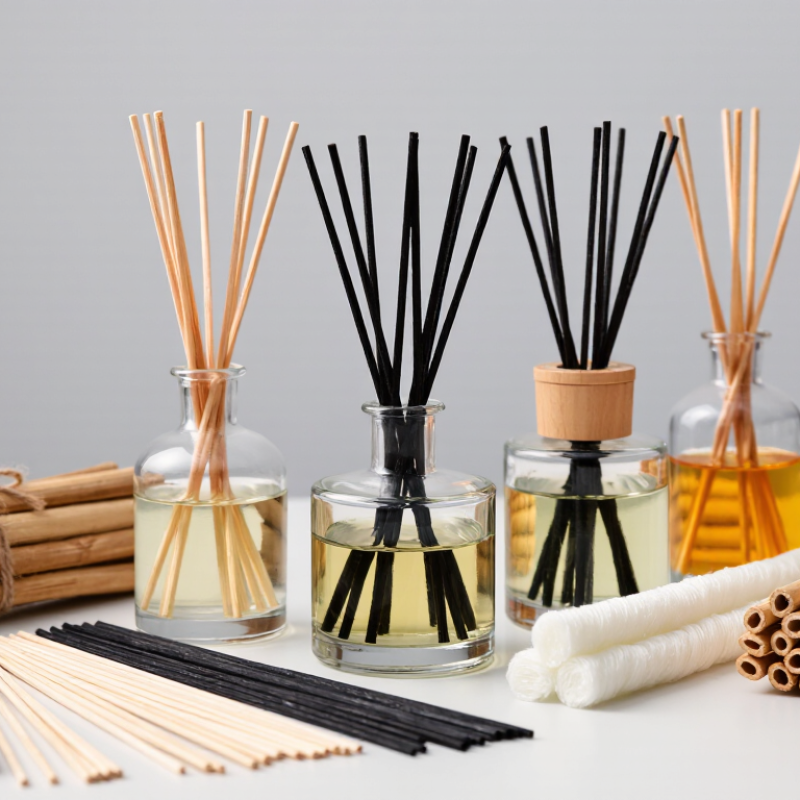
Reed Diffuser Sticks Explained: Rattan and Fiber in 20–30 cm Lengths
Wholesale buyers should compare rattan and fiber reeds by length, diameter, consistency, and tested fragrance output. The 20–30 cm range suits many tabletop bottles, but stick length alone cannot predict performance. Rattan has natural channels that draw and release liquid; channel variation can make scent strength less uniform. Fiber reeds use engineered pores and often offer more consistent wicking, though results vary by material and fragrance base. Small details matter.
Grand View Research estimated the global home fragrance market at about US$12.2 billion in 2023, with projected growth through 2030. This broad market figure is not reed-specific, but it signals a sizeable category for buyers to serve. For a practical comparison, test both materials in the intended bottle. Record how quickly the reeds absorb oil, how far scent travels, and whether the exposed ends dry out. A 20 cm stick may suit a narrow vessel; a 30 cm stick can look oversized or become unstable. I would not choose by length alone.
Tips: Request samples from each lot. Test them for at least one week in the same room, using the same liquid volume and number of sticks. Results can still shift with airflow and formula, so leave room for that uncertainty.
How 3–4 mm Diameter and 6–10 Sticks Influence Fragrance Diffusion
For wholesale buyers, reed diameter is a practical starting point, not a guarantee of strong fragrance. Sticks around 3–4 mm can balance liquid uptake and evaporation in many standard diffuser vessels. Thinner sticks may release scent more gently, while thicker ones can draw up more oil. Yet material porosity, cut quality, and the fragrance formula also affect performance. Diameter alone tells only part of the story.
Stick count changes the exposed surface area. Six sticks often suit a smaller room or a restrained scent profile; eight to ten may create a fuller impression in a larger, well-ventilated space. More is not always better. Crowding the neck can slow airflow around the reeds, and a stronger release may shorten product life. That trade-off deserves attention.
For a wholesale comparison, test the same liquid and vessel with 3 mm and 4 mm sticks, then repeat with six, eight, and ten. Note room size, temperature, and fragrance strength, and compare scent reach after several days. Small changes matter. Results can still vary between batches, especially when natural reeds differ in their internal channels. I would avoid choosing a specification from one quick test; a simple repeat trial gives buyers more dependable guidance.
Top 10 Wholesale Stick Types Compared by Wicking, Consistency, and Cost
Grand View Research estimated the global home-fragrance market at USD 9.2 billion in 2023, with projected annual growth of 4.5% through 2030. That demand makes wick consistency a practical wholesale concern. The report tracks the market, not stick performance, so buyers should verify claims with matched-scent tests.
Among ten common or specialty options, natural rattan offers moderate wicking at low cost, but pores vary by stem. Cotton-core and polyester-fiber sticks wick quickly and consistently, usually at a higher unit cost. Paper-fiber and cellulose-composite sticks can be uniform and economical, though moisture may soften them. Bamboo is inexpensive but often less predictable. Wood sticks are distinctive, yet their slower uptake can leave uneven scent release. Porous ceramic and sintered-mineral sticks resist swelling and wick steadily, but cost more and may be fragile. Hollow polymer sticks are consistent and reusable, but their flow depends heavily on channel design.
Cheap can become costly.
For a fair comparison, test all ten types in the same vessel, oil blend, room, and stick count. Record initial uptake, visible wetting after 24 hours, and liquid loss over seven days. Keep the room away from vents; drafts distort results. Supplier specifications help, but they are not a substitute for batch samples. I would retest natural materials across cartons: one clean-looking bundle can hide meaningful pore variation.
Wholesale Quality Checks: Measure Dimensions, Moisture, and Defect Rates
For wholesale reed diffuser sticks, appearance alone cannot confirm consistent quality.
Measure length and diameter with a caliper, comparing results with the agreed product specification. Measure sticks from several cartons, not just the top layer. Measure more than one. Note variation as well as average size, since uneven diameters can affect how sticks sit in bottle necks and absorb fragrance.
Moisture checks need care.
Let samples adjust to the inspection room, then use a meter suited to the plant material and record its settings. Readings can vary with storage conditions, so treat one measurement as a warning, not a verdict. Define defects before counting them: split ends, bends, mold-like spots, and loose fibers may each require separate records. Randomly inspect pieces from different cartons and calculate each defect rate against the total checked. A small sample can miss problems. That limitation matters. Keep dated notes, photos, and the batch number, then compare findings with the supplier’s agreed limits before accepting a shipment.
Bulk Buying Metrics: Match Stick Counts to Bottle Volume, MOQ, and Unit Cost
Top 10 Reed Diffuser Sticks for Wholesale Buyers
Match stick counts to bottle volume before comparing wholesale prices. A 100 ml bottle may work with five to eight sticks, but neck width and fragrance viscosity change the result. More sticks can increase scent throw and speed up liquid use. They can also make a diffuser feel too strong in a small room. Test the actual bottle, liquid, and stick material together. Record scent performance after one day and again after a week. A quick bench test beats assumptions.
Tips: Ask suppliers for sample bundles with different stick counts. Check whether sticks arrive loose or pre-counted, and confirm pack quantities. Calculate unit cost per usable stick, not just per carton. Include freight and expected waste. Small details matter.
Set your order quantity around the bottle volume and tested count. For example, 500 bottles using six sticks each need 3,000 sticks before adding a buffer for breakage or quality checks. A 5% buffer would bring the order to 3,150. Compare that figure with each supplier’s minimum order quantity, or MOQ. A lower price may require far more stock than your launch needs. I still find forecasts imperfect; demand can shift, and some sticks may vary slightly in thickness. Ask for consistent dimensions and a replacement policy, then weigh that assurance against the unit cost.
Top 10 Reed Diffuser Stick Options for Wholesale Buyers
Compare suggested stick counts by bottle volume, minimum order quantity (MOQ), and estimated stick-set cost.
These are indicative planning benchmarks—not live supplier quotes. Costs cover natural rattan sticks only,
excluding bottles, fragrance, packaging, and shipping; actual requirements vary with stick size, reed material,
and diffuser formulation.